The University Bookman
Reviewing Books that Build Culture
Join Kirktober and help support the mission of the University Bookman
Each week the Bookman brings you fresh reviews of the books that build culture, and essays that enliven the Permanent Things. Last year nearly 90,000 visitors engaged with the Bookman’s reviews, all free of charge and with no advertising to disrupt the reading experience. Our writers are touching hearts and minds across the globe with their reviews, bringing wisdom, creativity, and beauty to bear on the most important conversations happening in literature and culture.
Would you consider a gift to help us continue this work?
If just 1 in 4 of our readers contributed $10, we’d dramatically increase our capacity to recruit the brightest young writers and tackle more books and topics, all with a Kirkian angle. We’ve set a goal of raising $20k this month in order to continue our mission. Exceeding this amount will allow us to expand our work even more.
If you love the Bookman, and read us with regularity, we’d greatly appreciate your generous support this month.
With gratitude,
Luke Sheahan, Ph.D., editor
The University Bookman
P.S. As a special thank you to all Bookman supporters this month, we’ll send you a link to an audio recording of Ex Tenebris, one of Kirk’s best ghostly short stories. We think you’ll really enjoy it.
Campaign Progress
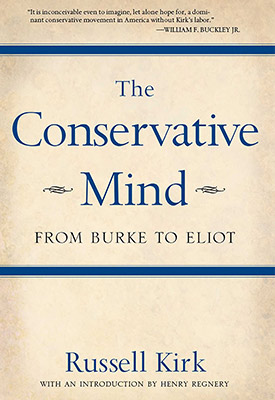
Ames, Hamilton, Marshall: Russell Kirk’s Other Founding Federalists
“The Federalist party, of course, is no more. It barely lasted past the fiftieth anniversary of American independence. But, as Russell Kirk demonstrated throughout his work, its conservative vision remains one of the most profound expressions of the meaning of the American Founding itself. Its adherents cannot simply be dismissed as retrograde aristocrats—they were patriots who understood that ‘order is the first need of all.’”
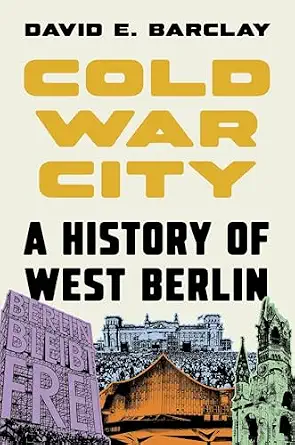
Going West, Berlin Style
“How did this fifty-year period and 33-year separation shape West Berlin into a city? How did the identity of this city evolve over time from simply being the Allied stronghold in Communist territories into a flourishing city in its own right? And what were the limitations that this identity imposed on the city’s day-to-day existence and its local culture?”
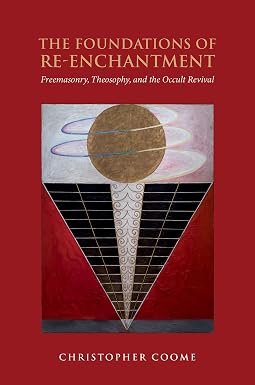
More Religion, Less Spiritualism, Please
“But there is nothing new about the ‘spiritual but not religious’ crowd: they are, in a certain, degraded sense, merely the spiritual and intellectual heirs of the occult revivalists who popped up in the late nineteenth and early twentieth centuries…”
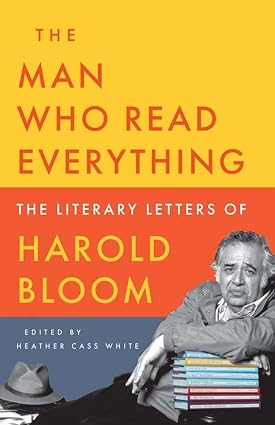
Letters of a Literary Legend
“These letters further confirm that Bloom, a guardian of our Western literary heritage, was one of the most important minds of the past half century.”
Shakespeare and the Art of Reading
“The humanities are necessary, Keilen argues, for us to function as a society. Education should come through reading the great works of literature, and, in the English language, Shakespeare is among the greatest teachers.”
A Collection of Children’s Stories That Transcends the Usual Fare
“The language and style are vivid and elegant all throughout, and the stories have a timeless quality that works on multiple levels.”

The Brothers Stuart and the Rise of Protestant England
“…Belloc remains a draught of fresh air and a happy antidote to the official version of English national history, with its idealized tale of public-spirited reforms and liberal advances broadening down to the happy present.”
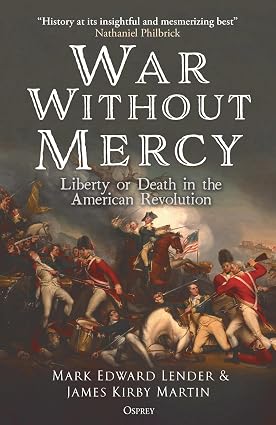
The Fog of the American War for Independence
“Academic and popular history of the period has long noted the early intimidation and violence that accompanied the rise of an American political consciousness and revolutionary movement.”
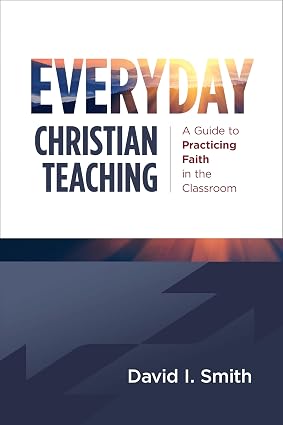
“To Think Faith” as Educators
“…faith and pedagogy should be in harmony. Smith’s guide is not a theory of faith and teaching or how to sprinkle faith within teaching. ‘It offers repeated practice at noticing and thinking through ways in which faith and the process of teaching might connect in everyday practice,’ in the mundane moments of elementary, secondary, or higher education classrooms.”
The Book Gallery
A collection of conversations with Bookman editor Luke C. Sheahan and writers and authors of imagination and erudition. Click on the icon in the upper right corner of the video to see more episodes in this series or check out our YouTube page.

Celebrate Russell Kirk's birthday (today) with a rich dessert, a ghostly tale, and a contribution to The University Bookman:

I can't praise @ubookman highly enough. If it's not a part of your reading life, it should be.
Should you have the ability, they are very much deserving of your support. I hope you'll consider donating to their Kirktober fundraiser, as I have done.
Shop through Creed and Culture Publishing