Edmund Burke’s “Speech on Conciliation with the Colonies”
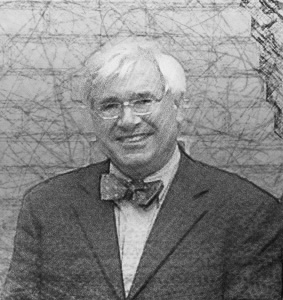 Vigen Guroian most recently was Professor of Religious Studies in Orthodox Christianity at the University of Virginia. He has been a recipient of the University of Virginia Student Council Distinguished Teacher Award.
He has authored ten books and contributed nearly two hundred articles to books, journals, encyclopedias, magazines, and newspapers. Tending the Heart of Virtue: How Classic Stories Awaken a Child’s Moral lmagination, published in 1998, received national attention in newspapers and on radio, including NPR’s “Talk of the Nation,” and “The Mark Steiner Show.” The book has continued to be read and used as an educational resource by parents, homeschoolers, religious instructors, and classical school faculties.
Over the years, Dr. Guroian has gained prominence as an Eastern Orthodox theologian and ethicist. His first book lncarnate Love: Essays in Orthodox Ethics (1987) is a favored text in college and seminary courses, and the University of Notre Dame Press published a second expanded edition in 2002. In 2004, Wipf and Stock Publishers reissued his second book on ethics in the Orthodox tradition, Ethics After Christendom: Toward an Ecclesial Christian Ethic (1994). Another book, The Melody of Faith: Theology in an Orthodox Key, was published in 2010.
Date: October 10, 2026
Time: 10:00 a.m. — 12:30 p.m. ET
Location: Russell Kirk Center Library
Seminar Description:
On March 22, 1775, Edmund Burke, the great British statesman and political philosopher, delivered in Parliament his speech on “Conciliation with the Colonies.” And while it came too late—just a month before the Battle of Lexington and Concord—to prevent the outbreak of war, it has been viewed since that time as a speech of immense political wisdom in which Burke argues for the importance of two fundamental virtues of politics: prudence and magnanimity. In the nineteenth century and early decades of the last century, Burke’s speech was taught in American schools as an example of the highest form of political rhetoric and as a lesson in history. The speech helped shape the character and politics of many American leaders. In our day, we need to return to it, especially in light of our commemoration of the 250th year of American Independence.
In this seminar, participants will look at “Conciliation with the Colonies” as a lesson in history and politics. They will also examine Burke’s masterful rhetoric, which helps make it one of the most important speeches in British Parliamentary history. Participants will first seek to understand the course of Burke’s arguments, his reasoning, examples, and proofs. They will then consider the rhetorical tools he employs to make his case about the American colonists’ temperament, viewpoint, and grievances, and what England must do to secure a reconciliation and peace with the colonies. They will consider how these tools add clarity, force, and elegance to Burke’s speech.
This seminar has been canceled and will be rescheduled in the Spring of 2027.