The University Bookman
Reviewing Books that Build Culture
Join Kirktober and help support the mission of the University Bookman
Each week the Bookman brings you fresh reviews of the books that build culture, and essays that enliven the Permanent Things. Last year nearly 90,000 visitors engaged with the Bookman’s reviews, all free of charge and with no advertising to disrupt the reading experience. Our writers are touching hearts and minds across the globe with their reviews, bringing wisdom, creativity, and beauty to bear on the most important conversations happening in literature and culture.
Would you consider a gift to help us continue this work?
If just 1 in 4 of our readers contributed $10, we’d dramatically increase our capacity to recruit the brightest young writers and tackle more books and topics, all with a Kirkian angle. We’ve set a goal of raising $20k this month in order to continue our mission. Exceeding this amount will allow us to expand our work even more.
If you love the Bookman, and read us with regularity, we’d greatly appreciate your generous support this month.
With gratitude,
Luke Sheahan, Ph.D., editor
The University Bookman
P.S. As a special thank you to all Bookman supporters this month, we’ll send you a link to an audio recording of Ex Tenebris, one of Kirk’s best ghostly short stories. We think you’ll really enjoy it.
Campaign Progress
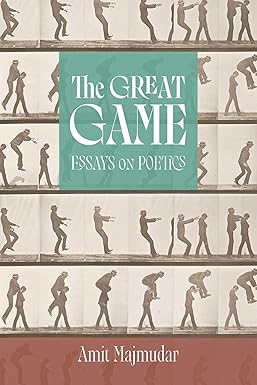
In Praise of Poetry and Form
“Majmudar often takes the long view, and from the long view, free verse is a new arrival in a variegated poetic history that stretches back into prehistory. To embrace it alone is to cut oneself off from that sweeping history and from the resources to be found there. There is still vitality in these neglected traditions. They are not a dead past.”
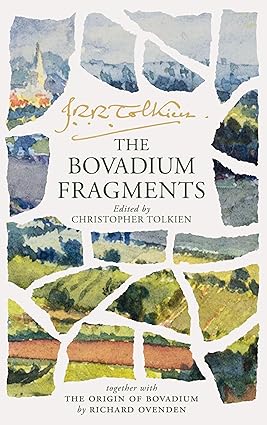
Monster is the Machine
“Few outside of Tolkien’s most dedicated students, however, were aware that he had written an entire satirical story against the automobile… [It] is (or rather was) the last significant piece of original Tolkien fiction to remain unpublished.”
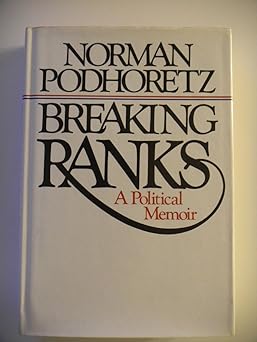
After the New Left: Rereading Breaking Ranks
“The recent death of Norman Podhoretz prompted me to return to his ‘political memoir…’ Published in 1979, it deserves to be read or re-read today—and not simply as a historical account of his evolution from left to right during the 1960s and 1970s.”

Amici
“…art historian William E. Wallace chronicles the rivalry and friendship of Michelangelo and Titian, noting that the two Italian geniuses were not as variant in outlook and craft as is popularly believed.”

Catholic or Nothing
“Her accounts inspire reflection on the allure of Roman Catholicism to noteworthy nineteenth and twentieth century thinkers, specifically its stress on authority, tradition, and dogma, its aesthetics (especially liturgical), and its forceful critique of predominant secularist ideologies and systems. However different these converts were, then, they all found countercultural Roman Catholicism a compelling counterstatement to their epoch’s regnant religious and social norms.”
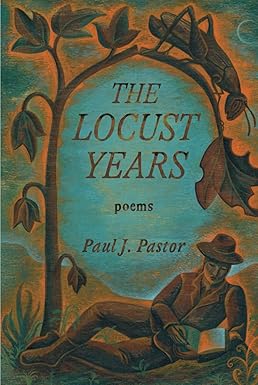
No Seed Which Dies Remains Alone
“For all the weight that Christianity and its paradoxes pull in the Western poetic tradition, you’d think that the theme of death and new life would be a rather tired one. And perhaps it is, at least in the work of more amateur poets than Pastor. But Pastor shows that the great paradox of the empty tomb is, in truth, an indefatigable one…”

Words from the Hearth
“Each poem maps a path on the journey by sharing the personal and religious experiences of a young woman falling in love, getting married, and then expecting and welcoming children. As a reader who tends to prefer prose to poetry, I appreciate the narrative arc as well as the opportunity to reminisce, through Reardon’s work, on my own similar experiences. Reardon’s writing is intensely religious, elevating the seemingly mundane aspects of home life to a spiritual level. Because it draws such powerful connections, it invites readers to ponder how even the simplest details of their lives can lead to the divine.”
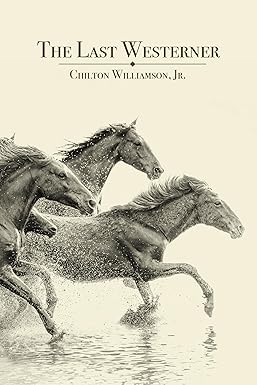
A Knight of the American West
“His new book is an exciting chivalric adventure and romance, while also being a contemporary American novel set in the Southwest USA. Exceptionally well written, its straightforward crafting is an encouragement to the reader who eagerly returns to its pages.”
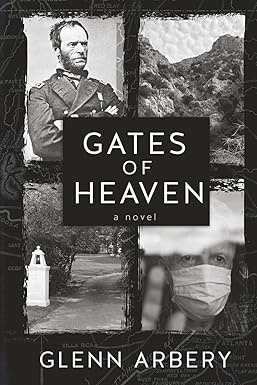
Coming to Terms with Sherman
“…Glenn Arbery has contemporary America down cold, the more so since the cultural variations between North and South are far from being as marked as they were even fifty years ago.”
The Book Gallery
A collection of conversations with Bookman editor Luke C. Sheahan and writers and authors of imagination and erudition. Click on the icon in the upper right corner of the video to see more episodes in this series or check out our YouTube page.


@ubookman Plus every donor will receive a new audio recording of Kirk's "Ex Tenebris," a great ghostly listen! Help @ubookman reach $20k and continue to review the books that build culture: https://buff.ly/MLnMl4e
Did you hear? This month a generous supporter has offered to MATCH every gift up to $5k for the Kirktober campaign in support of the mission of @ubookman: https://buff.ly/PECA0Az.
Shop through Creed and Culture Publishing