The University Bookman
Reviewing Books that Build Culture
Join Kirktober and help support the mission of the University Bookman
Each week the Bookman brings you fresh reviews of the books that build culture, and essays that enliven the Permanent Things. Last year nearly 90,000 visitors engaged with the Bookman’s reviews, all free of charge and with no advertising to disrupt the reading experience. Our writers are touching hearts and minds across the globe with their reviews, bringing wisdom, creativity, and beauty to bear on the most important conversations happening in literature and culture.
Would you consider a gift to help us continue this work?
If just 1 in 4 of our readers contributed $10, we’d dramatically increase our capacity to recruit the brightest young writers and tackle more books and topics, all with a Kirkian angle. We’ve set a goal of raising $20k this month in order to continue our mission. Exceeding this amount will allow us to expand our work even more.
If you love the Bookman, and read us with regularity, we’d greatly appreciate your generous support this month.
With gratitude,
Luke Sheahan, Ph.D., editor
The University Bookman
P.S. As a special thank you to all Bookman supporters this month, we’ll send you a link to an audio recording of Ex Tenebris, one of Kirk’s best ghostly short stories. We think you’ll really enjoy it.
Campaign Progress
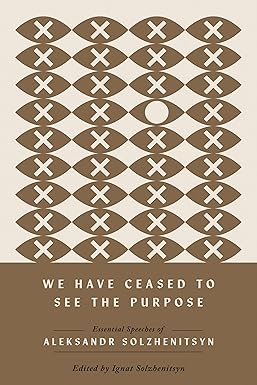
Solzhenitsyn and the Spirituality of Self-Limitation
“…any so-called ‘progress’ or advancement of society must begin, always and everywhere, in the soul of the individual—not in the revolutionary fantasies of radical social reformers, whose aims work to dissolve the spiritual bonds that underlie the traditional fabric of human communities.”
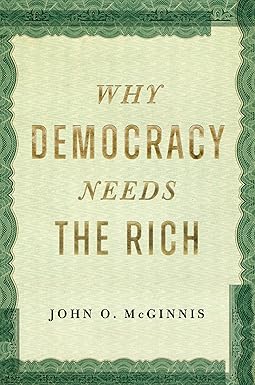
How Should We Think About Inequality?
“The book’s ultimate claim is not that the rich are virtuous, but that a democracy hostile to wealth will not become more equal—it will become more centralized, more bureaucratic, and less free. In that sense, McGinnis’s argument is less a defense of inequality than a defense of constitutional humility.”
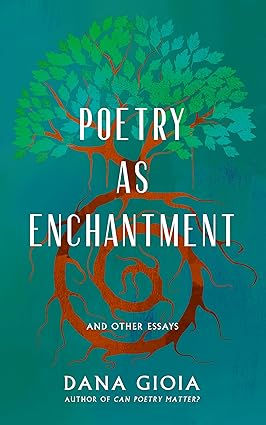
Enchanting Criticism: Dana Gioia as Literary Critic
“Gioia’s latest book is a testament to the persistence of authentic criticism in an age suspicious of and even hostile to literary values.”
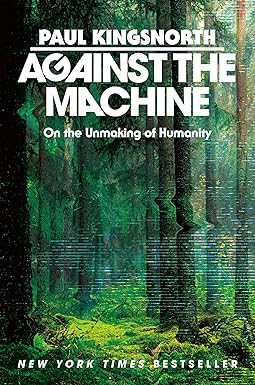
The Machine or the Garden?
“What Kingsnorth brilliantly exposes in Against the Machine is how the progressive vision of scientific, industrial, and technological progress is actually destroying the wisdom of the past in its merciless pursuit of perfection. Kingsnorth reminds us of the great taboo of modernity: ‘There is no such thing as a perfect society, and anyone who tries to build one will either go mad or become a tyrant.’”
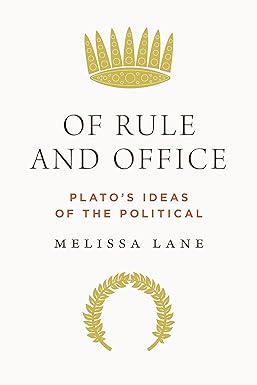
What Plato Meant
“…Princeton University philosopher and political theorist Melissa Lane explores Plato’s notion of rule and governorship, attempting to refresh the humanistic, liberal reading of Plato’s political theory.”
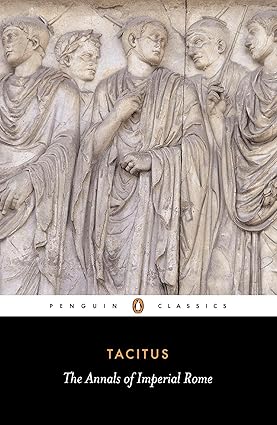
After the Republic: Tacitus on the End of a Free State
“…you don’t really have to ‘wonder’ if you’ve lost the republic… This is one of the lessons of the first few paragraphs of Tacitus’ Annals. In this dour, grumpy review of the first decades of the Roman Empire, Tacitus gives us seven signs that the republic is well and truly dead.”
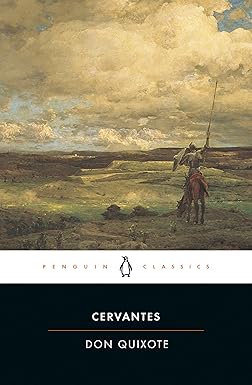
Why Cervantes’ Don Quixote Matters
“Don Quixote makes life the protagonist. The affirmation of life is truly Don Quixote’s quest. The venerable knight-errant seeks more than life from his life.”
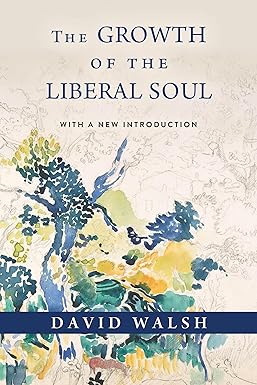
After Ideology but Before the Revolution: The Liberal Soul
“Walsh could give voice to a devastating criticism of the critics of liberal democracy because they forgot the most important aspect of what they chopped to pieces: there can be no analysis of liberal democracy outside the convictions that underpin it, namely mutual respect for the dignity and rights of others. There is no higher purpose possible than the affirmation of the infinite worth of each human being, of each ‘person,’ and the political consequences of that affirmation: to build that insight into the regimes of self-government.”
Liberalism’s Death Has Been Greatly Exaggerated
“In this profound work, Walsh engages the friends and foes of liberalism alike to reveal its enduring appeal and resilience. Throughout he urges us to consider liberalism not so much as a stale academic doctrine, but as a lived experience rooted in the core belief of the inviolable dignity of each person as a free and rational being.”
The Book Gallery
A collection of conversations with Bookman editor Luke C. Sheahan and writers and authors of imagination and erudition. Click on the icon in the upper right corner of the video to see more episodes in this series or check out our YouTube page.


@ubookman Plus every donor will receive a new audio recording of Kirk's "Ex Tenebris," a great ghostly listen! Help @ubookman reach $20k and continue to review the books that build culture: https://buff.ly/MLnMl4e
Did you hear? This month a generous supporter has offered to MATCH every gift up to $5k for the Kirktober campaign in support of the mission of @ubookman: https://buff.ly/PECA0Az.
Shop through Creed and Culture Publishing