The University Bookman
Reviewing Books that Build Culture
Join Kirktober and help support the mission of the University Bookman
Each week the Bookman brings you fresh reviews of the books that build culture, and essays that enliven the Permanent Things. Last year nearly 90,000 visitors engaged with the Bookman’s reviews, all free of charge and with no advertising to disrupt the reading experience. Our writers are touching hearts and minds across the globe with their reviews, bringing wisdom, creativity, and beauty to bear on the most important conversations happening in literature and culture.
Would you consider a gift to help us continue this work?
If just 1 in 4 of our readers contributed $10, we’d dramatically increase our capacity to recruit the brightest young writers and tackle more books and topics, all with a Kirkian angle. We’ve set a goal of raising $20k this month in order to continue our mission. Exceeding this amount will allow us to expand our work even more.
If you love the Bookman, and read us with regularity, we’d greatly appreciate your generous support this month.
With gratitude,
Luke Sheahan, Ph.D., editor
The University Bookman
P.S. As a special thank you to all Bookman supporters this month, we’ll send you a link to an audio recording of Ex Tenebris, one of Kirk’s best ghostly short stories. We think you’ll really enjoy it.
Campaign Progress
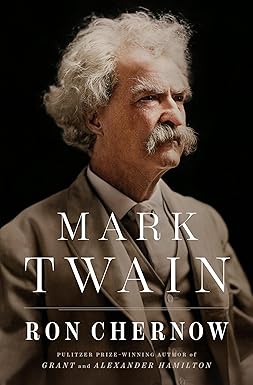
Mark Twain Revisited
“An undisguised cosmopolitan who never wanted to forget his boyhood in the American heartland, Mark Twain was a walking—and strolling—contradiction.”
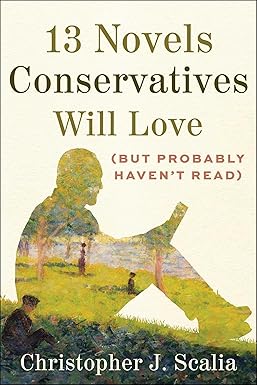
Restocking Conservatives’ Bookshelves
“A distinct thread connecting these novels is the conscious reflection within them on the importance of reading in forming a healthy and virtuous imagination.”
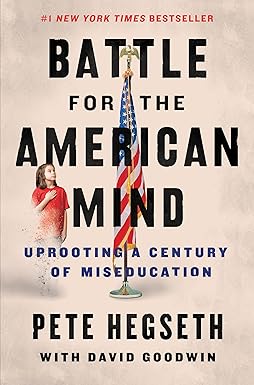
Educational Counterrevolution
“The central thesis of the book is that the Western Christian paideia that made the American experiment in liberty and self-government possible has nearly been stamped out of the public schools.”
Political Economy Before Adam Smith
“…[the book] is a compilation of various tracts on the intersection of commerce and statecraft—many of which are snapshots of McCulloch’s own free-market beliefs—that serve as a compelling precursor of Smithian political economy.”
Science and Meaning: Parallel Tracks?
“Science is not the sort of activity that can answer the question, ‘Does life have meaning?’ To expect science to answer that question is like expecting your plumber to tell you whether installing fancier bathroom fixtures will make you happier.”
Geopolitics and the Making of the Modern World
“Brands’s book should find a ready audience among those interested in developments in the international scene over the last century. It is particularly effective in dealing with the threat that China’s emerging power and influence pose to the West today…”
The Context for Human Dignity
“While the twentieth century was still sporadically marked by remnants of Christian influence and dominance, the twenty-first has seen the final divorce of the secular and sacred, and the consequences are evident. What Leo XIII warned of, the evils he battled, have been let loose, paradigmatically captured by Artificial Intelligence which poorly imitates and devalues that which makes us essentially human… We would do well then to read Hittinger’s book in reflecting on how to face these challenges.”
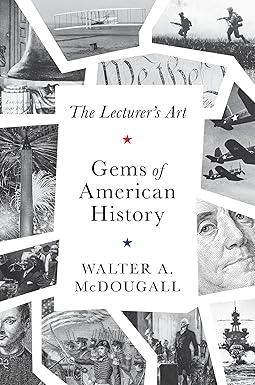
Between Greatness and Hubris
“At the core of [the book] is the notion that while America is an exceptional nation, we are not immune from the perils that beset past countries and empires.”
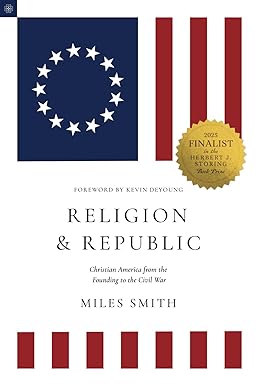
Protestant Institutionalism and Christian America
“…Smith provides a thematic overview of the period between 1800 and 1860. His book is somewhat unique in that whereas many debates concern the religious character of the Founding or the Founders, Smith is concerned with the period afterwards.”
The Book Gallery
A collection of conversations with Bookman editor Luke C. Sheahan and writers and authors of imagination and erudition. Click on the icon in the upper right corner of the video to see more episodes in this series or check out our YouTube page.


@ubookman Plus every donor will receive a new audio recording of Kirk's "Ex Tenebris," a great ghostly listen! Help @ubookman reach $20k and continue to review the books that build culture: https://buff.ly/MLnMl4e
Did you hear? This month a generous supporter has offered to MATCH every gift up to $5k for the Kirktober campaign in support of the mission of @ubookman: https://buff.ly/PECA0Az.
Shop through Creed and Culture Publishing