The University Bookman
Reviewing Books that Build Culture
Join Kirktober and help support the mission of the University Bookman
Each week the Bookman brings you fresh reviews of the books that build culture, and essays that enliven the Permanent Things. Last year nearly 90,000 visitors engaged with the Bookman’s reviews, all free of charge and with no advertising to disrupt the reading experience. Our writers are touching hearts and minds across the globe with their reviews, bringing wisdom, creativity, and beauty to bear on the most important conversations happening in literature and culture.
Would you consider a gift to help us continue this work?
If just 1 in 4 of our readers contributed $10, we’d dramatically increase our capacity to recruit the brightest young writers and tackle more books and topics, all with a Kirkian angle. We’ve set a goal of raising $20k this month in order to continue our mission. Exceeding this amount will allow us to expand our work even more.
If you love the Bookman, and read us with regularity, we’d greatly appreciate your generous support this month.
With gratitude,
Luke Sheahan, Ph.D., editor
The University Bookman
P.S. As a special thank you to all Bookman supporters this month, we’ll send you a link to an audio recording of Ex Tenebris, one of Kirk’s best ghostly short stories. We think you’ll really enjoy it.
Campaign Progress
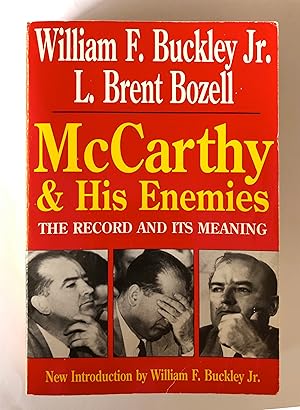
Buckley at 100: Countering the Communist Threat
“…McCarthy raised a specific issue that American conservatives in the halcyon days of the modern movement could rally around–whether the U.S. State Department and its security program were corrupted by what Buckley and Bozell deemed the ‘criminal nonchalance’ of the department in its treatment of security and loyalty risks.”
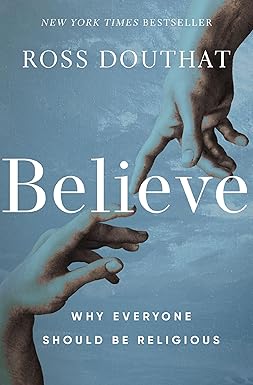
Reason Reimagined: Ross Douthat’s Case for Belief
“…reality shows signs of intelligent design oriented to the good of human beings. Even more, the mind is uniquely capable of discovering that intelligent design. And miracles and supernatural experiences continue to occur in the modern world, even under the microscope of modern science.”

Evidence-based Answers for Life’s Great Mysteries
“…priest and philosopher Robert Spitzer tackles real questions from ordinary people about life and faith.”
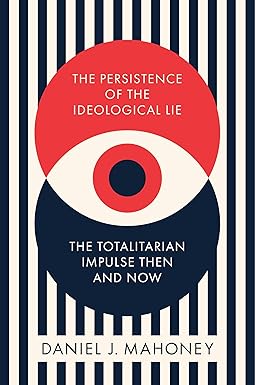
Unmasking the Ideological Lie
“…Mahoney has taken on an ambitious task: a sweeping examination of the nature, history, and consequences of the ideology that permeates almost all of modern existence…”
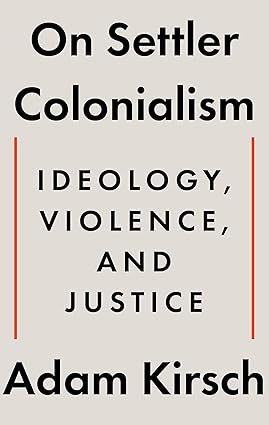
A Measured Look at an Unsettling Ideology
“Kirsch could have limited himself to serving up red meat to readers weary of the excesses of radical students and professors breathing ‘theory and invective,’ but instead, he challenged himself by seriously wrestling with a real problem identified by the settler colonialists. The creation of settler-colonial countries really did displace huge numbers of natives. What does that do to the legitimacy of these countries?”
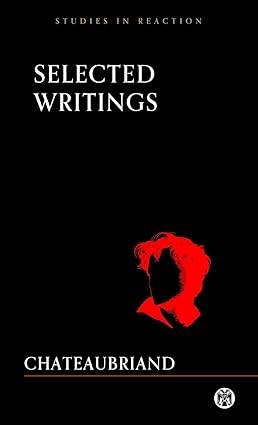
Stylist for the Ages
“To estimate Chateaubriand with any justice, one should try to imagine what might have been the effect had Lord Byron not died prematurely of camp-fever at Missolonghi, but rather, having returned to and reconciled with his native country, adopted the political and religious principles of Burke, sat down in his life’s autumn to write an immortal autobiography, and anticipated the coming of the Oxford Movement with a series of energetic defenses of the twin causes of Tory Monarchism and the Established Church.”
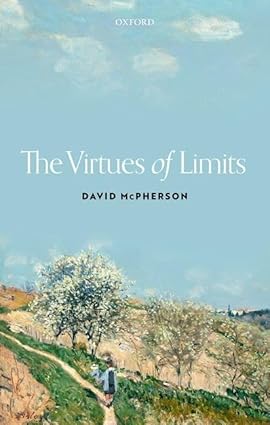
Limits and the Good Life
“…David McPherson has written an argument for the importance of ‘recognizing proper limits in human life.’ He focuses on the ‘limiting virtues’ of ‘humility, reverence, moderation, contentment, neighborliness, and loyalty.’”
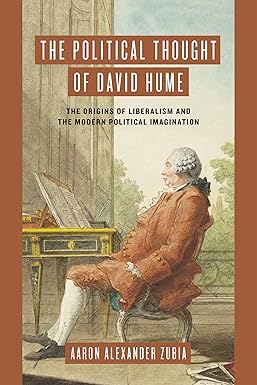
We’re All Epicureans Now
“…as Zubia argues convincingly, Hume’s political vision is not entirely modern but resurrects and reinforces ideas native to the ancient Epicurean framework of empirical skepticism. Hume’s vision of politics, mankind, and truth itself was deeply shaped by Epicureanism, which has, in turn, shaped the modern imagination.”
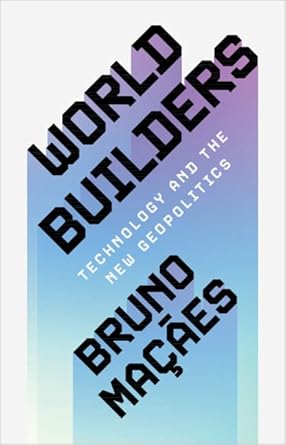
The Rise of the World Builders
“Maçães’s literal interpretation proposes that the ‘geo’ in ‘geopolitics’ takes on new, technological, meaning, insofar as the earth alone is no longer the surface or space of kinetic encounter; rather, ‘this new battlefield is synthetic or virtual’—comprising the realms of technology, energy, trade, and finance—and ‘the way to win is to reprogram the system, to step outside the game world.'”
The Book Gallery
A collection of conversations with Bookman editor Luke C. Sheahan and writers and authors of imagination and erudition. Click on the icon in the upper right corner of the video to see more episodes in this series or check out our YouTube page.


Did you hear? This month a generous supporter has offered to MATCH every gift up to $5k for the Kirktober campaign in support of the mission of @ubookman: https://buff.ly/PECA0Az.
@ubookman @NadyaWilliams81 "The past couple of years have been a time of seemingly endless jeremiads about the decline of reading, literacy, and books..in the midst of such chaos, @ubookman simply continues to review ‘books that build culture’—a mission to which I am honored to contribute.”
Shop through Creed and Culture Publishing