The University Bookman
Reviewing Books that Build Culture
Join Kirktober and help support the mission of the University Bookman
Each week the Bookman brings you fresh reviews of the books that build culture, and essays that enliven the Permanent Things. Last year nearly 90,000 visitors engaged with the Bookman’s reviews, all free of charge and with no advertising to disrupt the reading experience. Our writers are touching hearts and minds across the globe with their reviews, bringing wisdom, creativity, and beauty to bear on the most important conversations happening in literature and culture.
Would you consider a gift to help us continue this work?
If just 1 in 4 of our readers contributed $10, we’d dramatically increase our capacity to recruit the brightest young writers and tackle more books and topics, all with a Kirkian angle. We’ve set a goal of raising $20k this month in order to continue our mission. Exceeding this amount will allow us to expand our work even more.
If you love the Bookman, and read us with regularity, we’d greatly appreciate your generous support this month.
With gratitude,
Luke Sheahan, Ph.D., editor
The University Bookman
P.S. As a special thank you to all Bookman supporters this month, we’ll send you a link to an audio recording of Ex Tenebris, one of Kirk’s best ghostly short stories. We think you’ll really enjoy it.
Campaign Progress

Charles W. Colson
The Russell Kirk Center is sad to hear of the death of Chuck Colson. He will mostly be remembered for the wonderful work he did with prisoners, giving their lives dignity and meaning. After his time in prison, Colson devoted himself to cultural renewal, which he saw...
Adrienne Rich and an Assessment of Contemporary American Poetry
Even measured against the hyperbole of her obituaries, which are less about the quality and resonance of her poetry and more about the ideologies of her admirers, it is possible to assess the public value of contemporary American poetry in the context of Adrienne Rich’s words.
Poetically Thinking
The Poetry of Thought: From Hellenism to Celan by George Steiner. New Directions, 2012. 224 pages, $25. In an often-cited passage of Molière’s Le Bourgeois Gentilhomme, Monsieur Jourdain explains to the Maître de Philosophie that he wants to write a love note to...
Spring Newsletter
The latest number of the Russell Kirk Center newsletter (Spring 2012) has just been posted. It features news on the launch of the publishing partnership between the Kirk Center and Brazilian publisher É Realizações and a profile of Wilbur Fellow Ryan Streeter. You...
The Sexual Revolution and the Will to Disbelieve
Adam and Eve After the Pill: Paradoxes of the Sexual Revolution by Mary Eberstadt. Ignatius Press (San Francisco), 2012. 175 pages, $20.Mary Eberstadt’s slim new essay collection, Adam and Eve After the Pill: Paradoxes of the Sexual Revolution, may at first be more...

Uncanny Tales of the Moral Imagination
The Princess of All Lands by Russell Kirk. Arkham House Publishers, Sauk City, Wisconsin 53583. 1979. 238 pages. $8.95. [The stories from this volume are included in Ancestral Shadows (Eerdmans 2004), Kirk’s collected ghostly tales. —Ed.] On the surface, these are...
RIP Irving Louis Horowitz
The Kirk Center and The University Bookman regret the passing of sociologist Irving Louis Horowitz, who died in March. Recipient of many accolades, Horowitz was a sociologist of wide-ranging interests, from religionto analysis of state power and social order in...
Grounding the Life of the Mind
Blue Collar Intellectuals: When the Enlightened and the Everyman Elevated America by Daniel J. Flynn. ISI Books (Wilmington, DE), 2011. 187 pp., $28 clothThe Great Books approach to education, promoted by one of the subjects of this book, Mortimer Adler, is noble in...
A Thundering Paradox of a Life
George F. Kennan: An American Life by John Lewis Gaddis. New York: The Penguin Press. 2011. 784 pp. $40. William Manchester in his acclaimed biography of Douglas MacArthur, American Caesar, introduced his subject as a “thundering paradox of a man.” The same could be...
The Book Gallery
A collection of conversations with Bookman editor Luke C. Sheahan and writers and authors of imagination and erudition. Click on the icon in the upper right corner of the video to see more episodes in this series or check out our YouTube page.


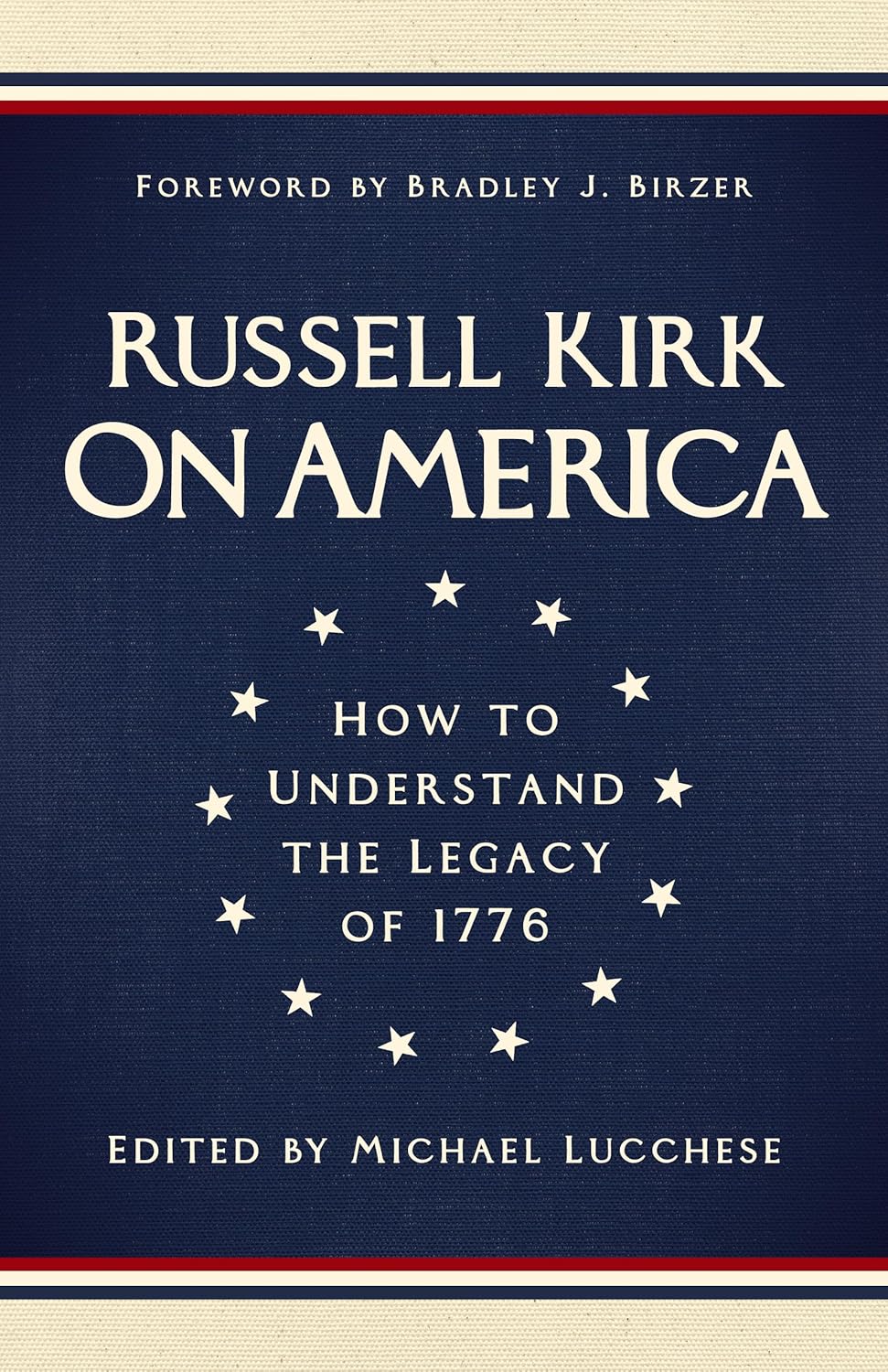
Kirk saw poetry, fiction, tradition, and restraint as essential to understanding America and preserving its character. In his review of "On America," @cjscalia explores Kirk’s vision of the founding, statesmanship, literature, and the enduring ideas that have shaped the republic.
Shop through Creed and Culture Publishing