The University Bookman
Reviewing Books that Build Culture
Join Kirktober and help support the mission of the University Bookman
Each week the Bookman brings you fresh reviews of the books that build culture, and essays that enliven the Permanent Things. Last year nearly 90,000 visitors engaged with the Bookman’s reviews, all free of charge and with no advertising to disrupt the reading experience. Our writers are touching hearts and minds across the globe with their reviews, bringing wisdom, creativity, and beauty to bear on the most important conversations happening in literature and culture.
Would you consider a gift to help us continue this work?
If just 1 in 4 of our readers contributed $10, we’d dramatically increase our capacity to recruit the brightest young writers and tackle more books and topics, all with a Kirkian angle. We’ve set a goal of raising $20k this month in order to continue our mission. Exceeding this amount will allow us to expand our work even more.
If you love the Bookman, and read us with regularity, we’d greatly appreciate your generous support this month.
With gratitude,
Luke Sheahan, Ph.D., editor
The University Bookman
P.S. As a special thank you to all Bookman supporters this month, we’ll send you a link to an audio recording of Ex Tenebris, one of Kirk’s best ghostly short stories. We think you’ll really enjoy it.
Campaign Progress
Habit and Being in Burke
Peter Stanlis is well known to students of eighteenth-century history and literature as the author of Edmund Burke and the Natural Law (1958) and, indeed, this book and his many essays and articles have brought him recognition as one of the country’s leading...
Ancient Virtues in a Postmodern World
Truth, Beauty, and Goodness Reframed: Educating for the Virtues in the Twenty-First Century by Howard Gardner. Basic Books, 2011, 244 pp., $26. As author of Multiple Intelligences, Harvard professor Howard Gardner stands as perhaps the most celebrated, and misapplied,...

The Rescue of Culture
The Intemperate Professor, and Other Cultural Splenetics by Russell Kirk. Baton Rouge: Louisiana State University Press, 1965 [revised edition: Sherwood Sugden & Co., 1988]. 163 pp. The afternoon this reviewer completed his reading of this book, he drove along the...
Memories of Johnson
On Essays and LettersI. The two volumes of Johnsonian Miscellanies were abridged and edited by G. Birkbeck Hill and published by Oxford and Harper & Brothers in 1897. Theserecollections contain comments on Johnson from sources other than Boswell. Volume One is 488...
The Older Rhetoric Revisited: Hugh Blair and the Public Virtue of Style
Lectures on Rhetoric and Belles Lettres, by Hugh Blair. Edited with a Critical Introduction by Harold F. Harding. Carbondale: Southern Illinois University Press, 1965. Two Vols., 496 and 566 pp. One of the most successful of all nineteenth-century textbooks was Hugh...
When free trade is not fair exchange
How the West Was Lost: Fifty Years of Economic Folly—and the Stark Choices Ahead by Dambisa Moyo. London: Allen Lane, 2011, paper, 226 pages In 2009, when Zambian-born economist Dambisa Moyo published Dead Aid, her devastating analysis of the inefficacy of Western...
The Deviant University
The university today is being subjected to the brutal searchlight of inquiry and criticism. Ironically, at a time when education has acquired a new mystique and is the method offered for curing most of the ills of society, this mystique is not associated with...
The Dignity Conspiracy and its Strange Hold on Our Souls
Modern and American Dignity: Who We Are as Persons, and What That Means for Our Future by Peter Augustine Lawler (ISI Books, 2010). In response to the essay collection Human Dignity and Bioethics, published by George W. Bush’s President’s Council on Bioethics, Steven...
Education as Part of America’s Secular Religion
By leaps and bounds, the demand for education—that is, certified professional instruction in socially approved institutions—has been mounting. While some recentgrowth is the effect of high birth rates, demand for education has grown independently also. School age...
The Book Gallery
A collection of conversations with Bookman editor Luke C. Sheahan and writers and authors of imagination and erudition. Click on the icon in the upper right corner of the video to see more episodes in this series or check out our YouTube page.


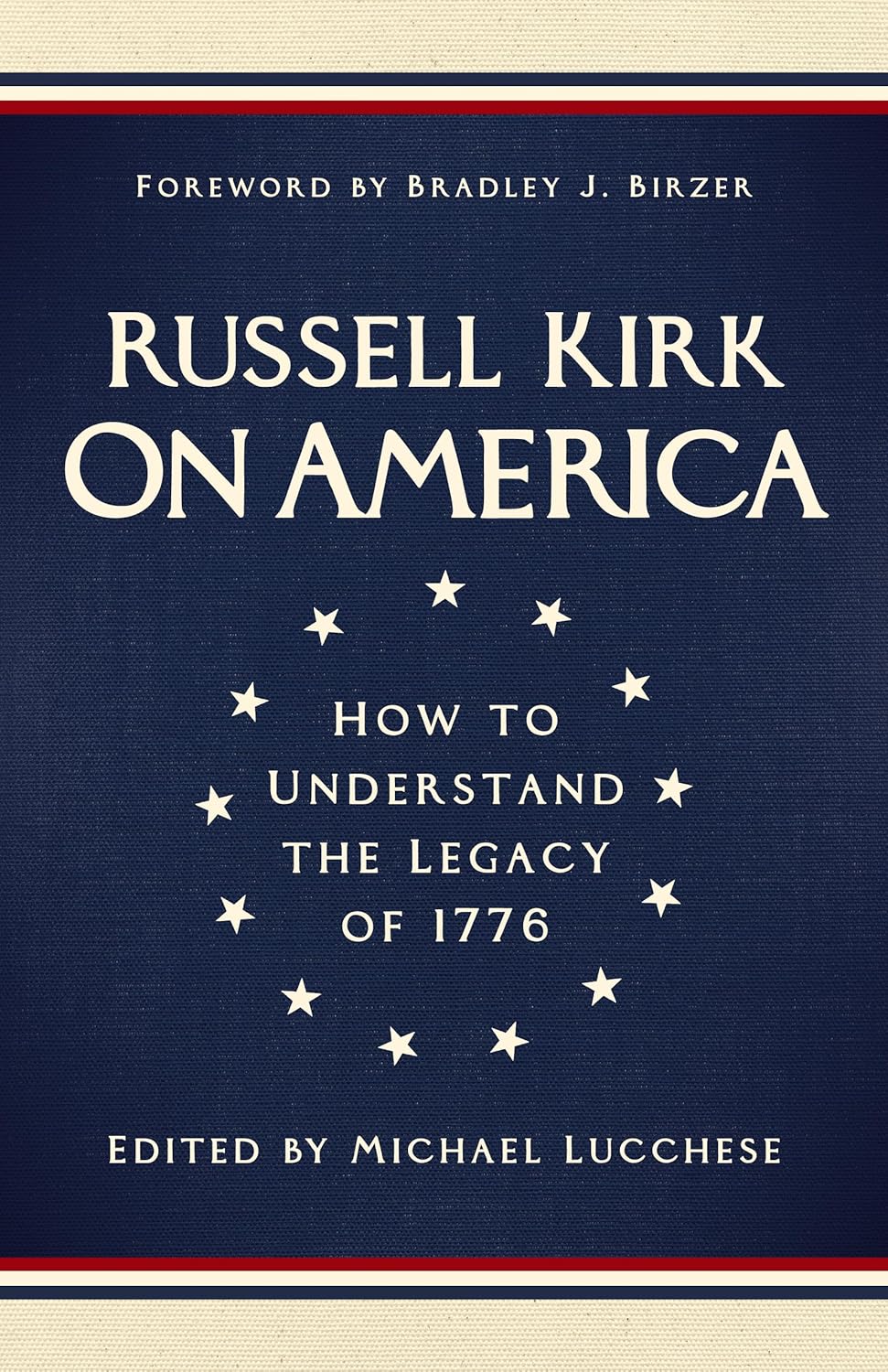
Kirk saw poetry, fiction, tradition, and restraint as essential to understanding America and preserving its character. In his review of "On America," @cjscalia explores Kirk’s vision of the founding, statesmanship, literature, and the enduring ideas that have shaped the republic.
Shop through Creed and Culture Publishing