The University Bookman
Reviewing Books that Build Culture
Join Kirktober and help support the mission of the University Bookman
Each week the Bookman brings you fresh reviews of the books that build culture, and essays that enliven the Permanent Things. Last year nearly 90,000 visitors engaged with the Bookman’s reviews, all free of charge and with no advertising to disrupt the reading experience. Our writers are touching hearts and minds across the globe with their reviews, bringing wisdom, creativity, and beauty to bear on the most important conversations happening in literature and culture.
Would you consider a gift to help us continue this work?
If just 1 in 4 of our readers contributed $10, we’d dramatically increase our capacity to recruit the brightest young writers and tackle more books and topics, all with a Kirkian angle. We’ve set a goal of raising $20k this month in order to continue our mission. Exceeding this amount will allow us to expand our work even more.
If you love the Bookman, and read us with regularity, we’d greatly appreciate your generous support this month.
With gratitude,
Luke Sheahan, Ph.D., editor
The University Bookman
P.S. As a special thank you to all Bookman supporters this month, we’ll send you a link to an audio recording of Ex Tenebris, one of Kirk’s best ghostly short stories. We think you’ll really enjoy it.
Campaign Progress

The Merging of Cultures
The West in Russia and China by Donald W. Treadgold. Volume 1, Russia 1472–1917, xxx + 324 pp. Volume 2, China 1582–1949, xxi + 251 pp. New York: Cambridge University Press, 1973. This work is an extraordinary undertaking. One scholar working by himself traces the...
The Public Responsibilities of Known American Poets
Recently, Forbes magazine attempted to measure the effect of Ruth Lilly’s $185 million bequest to the Poetry Foundation. That foundation, which publishes Poetry magazine, claims that it reached 19 million new poetry readers last year. John Barr, its president, a poet...
The Great Historian of Culture
A Historian and His World: A Life of Christopher Dawson by Christina Scott. With a new introduction by Russell Kirk, and a postscript by Christopher Dawson: “Memories of a Victorian Childhood.” Transaction Books, New Brunswick, New Jersey, [1984] 1991.Christopher...
The Quality of Our Imaginations
A conversation with Gary L. Gregg.The University Bookman is pleased to present this interview with Gary L. Gregg, II, who holds the Mitch McConnell Chair in Leadership at the University of Louisville, where he directs the McConnell Center. He is the author or editor...
Rescuing the Past
The Iona Conspiracy by G. L. Gregg. Winged Lion Press, 2010, 432 pp., $18. The Iona Conspiracy, the sequel to Dr. Gary Gregg’s novel The Sporran, is a gripping tale which follows the adventures of thirteen-year-old Jacob Boyd. In the previous book, Jacob came to...
The Faith of Men of Letters
In this review from 1987, the late Dr. Panichas reviews Russell Kirk’s book on Eliot—he calls it Kirk’s greatest work—and discusses the cultural role of “the man of letters.”
Champion of Faith and Common Sense
Defiant Joy: The Remarkable Life & Impact of G. K. Chesterton by Kevin Belmonte. Thomas Nelson, 2011, $16.99, 318 pages Many years ago, this reviewer attended a weekend stay at the home of a prominent historian and Roman Catholic gentleman, to assess his personal...
Lincoln and the Dignity of the Presidency
The Roman Republic was at the back of the minds of the framers of the American Constitution; it was their hope that the chief magistrate of these United States would conduct himself with “the high old Roman virtue,” becoming an exemplar of pietas, gravitas,...
Ortega y Gasset’s Metaphysical Cure for Invertebrate Cultures
The Revolt of the Masses by José Ortega y Gasset. W. W. Norton, [1930] 1994, 192 pages. Reviewed by Pedro Blas González When the Spanish philosopher José Ortega y Gasset (1883–1955) published his seminal work The Revolt of the Masses (La Rebellion de las Masas) in...
The Book Gallery
A collection of conversations with Bookman editor Luke C. Sheahan and writers and authors of imagination and erudition. Click on the icon in the upper right corner of the video to see more episodes in this series or check out our YouTube page.


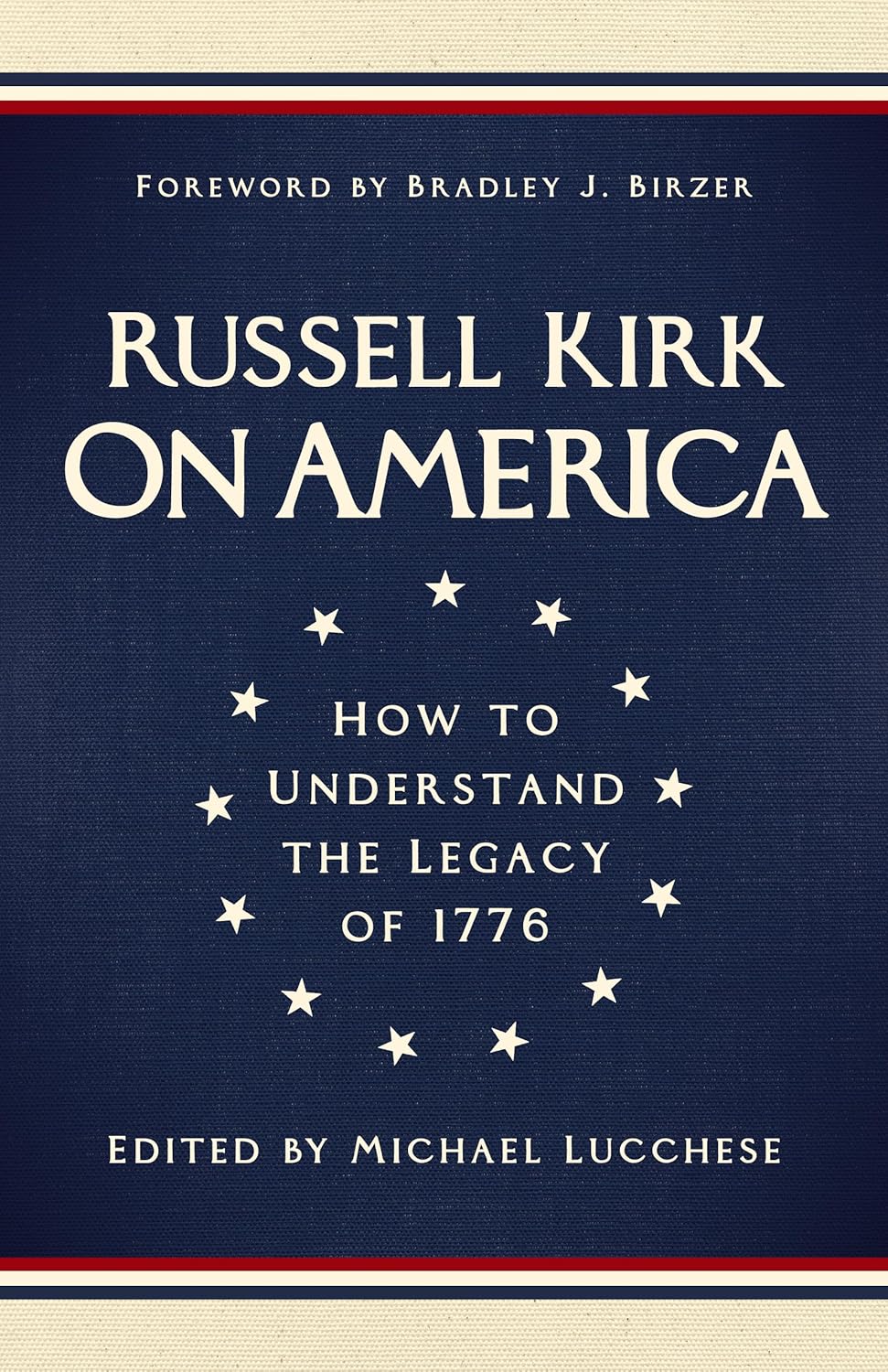
Kirk saw poetry, fiction, tradition, and restraint as essential to understanding America and preserving its character. In his review of "On America," @cjscalia explores Kirk’s vision of the founding, statesmanship, literature, and the enduring ideas that have shaped the republic.
Shop through Creed and Culture Publishing