The University Bookman
Reviewing Books that Build Culture
Join Kirktober and help support the mission of the University Bookman
Each week the Bookman brings you fresh reviews of the books that build culture, and essays that enliven the Permanent Things. Last year nearly 90,000 visitors engaged with the Bookman’s reviews, all free of charge and with no advertising to disrupt the reading experience. Our writers are touching hearts and minds across the globe with their reviews, bringing wisdom, creativity, and beauty to bear on the most important conversations happening in literature and culture.
Would you consider a gift to help us continue this work?
If just 1 in 4 of our readers contributed $10, we’d dramatically increase our capacity to recruit the brightest young writers and tackle more books and topics, all with a Kirkian angle. We’ve set a goal of raising $20k this month in order to continue our mission. Exceeding this amount will allow us to expand our work even more.
If you love the Bookman, and read us with regularity, we’d greatly appreciate your generous support this month.
With gratitude,
Luke Sheahan, Ph.D., editor
The University Bookman
P.S. As a special thank you to all Bookman supporters this month, we’ll send you a link to an audio recording of Ex Tenebris, one of Kirk’s best ghostly short stories. We think you’ll really enjoy it.
Campaign Progress
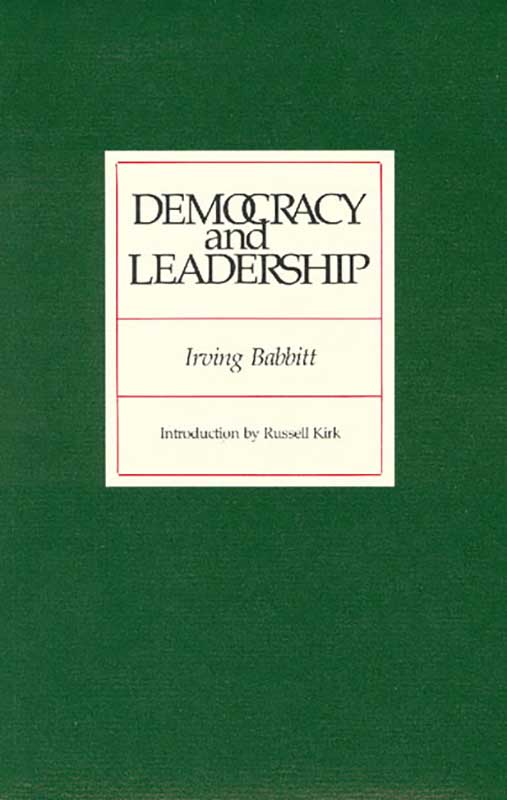
Democracy and Leadership at 100: Lessons for the 21st Century
“…Russell Kirk… calls it ‘one of the few truly important works of political thought to be written by an American in the twentieth century—or, for that matter, during the past two centuries.’ He saw clearly that Babbitt’s diagnosis of the post-WWI moment was rooted in a deep understanding of timeless elements of the human condition. Moreover, because the trends Babbitt discussed in the 1920s have continued largely unabated since that time, his critique of them and prescriptions to remedy them remain salient.”
The Great Intellectual Scandal: Irving Babbitt and His Traditionalist Critics
“…Babbitt identified tendencies in Western modernity that were eroding the very foundations of civilization, including those of American constitutionalism. He also showed how in the circumstances of the modern world they might be reinforced. He explained, in particular, how a transformation of the imagination was causing disastrous moral-spiritual and cultural change and what countermeasures were needed.”
Irving Babbitt and Populism
“Good democratic leaders possess moral imagination, the ability to see life for what it is and to anticipate the path of prudence. Moreover, good leadership stems from good character that is the product of a sound inner life. Like any other form of government, democracy achieves the aspirations of civilization in proportion to its ability to produce men and women of character who concentrate on the inner life. The crisis of American democracy was, for Babbitt, a crisis of character and leadership.”
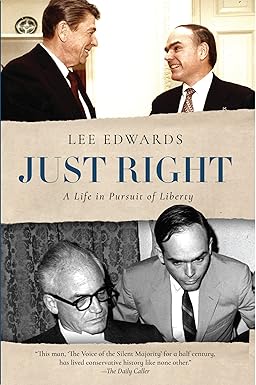
Edwards: From the Beginning of the Right
Just Right: A Life in Pursuit of Liberty By Lee Edwards. ISI Books, 2017. Hardcover, 378 pages, $29.95. Reviewed by George H. Nash. In his lively new memoir Just Right, Lee Edwards remarks that four distinct groups have molded the modern American conservative...
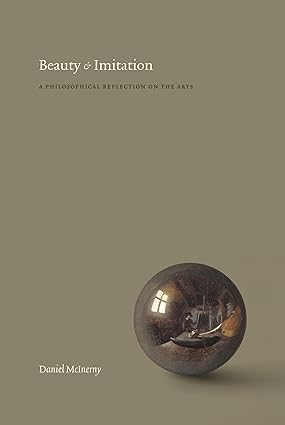
Must Matters of Taste Not Be Disputed?
“Art is beautiful in revealing the truth of man to himself such that he grows in knowledge of the good and the true through the encounter.”
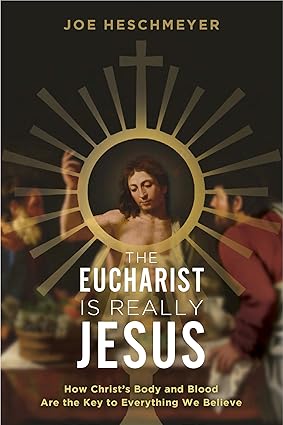
Seeing the True Presence
“…Heschmeyer examines the Eucharist in its Biblical, theological, philosophical, and historical contexts. ‘Sometimes,’ he notes, ‘to increase our understanding, we don’t need new information but a new way of thinking about the information that we already have.’”
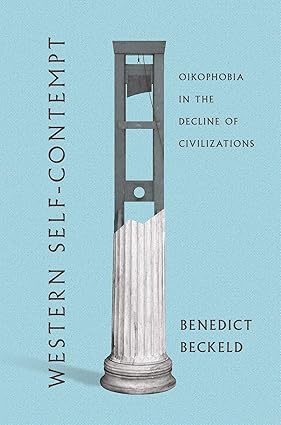
Home, Sour Home
“Beckeld finds oikophobia not only in the present-day United States but also across the West and in ancient Greece and Rome, eighteenth-century France, and twentieth-century Great Britain. Oikophobia’s onset is significant because it has weakened the places in which it appeared.”
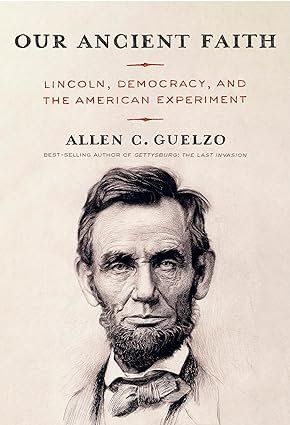
Lincoln and the Democratic Cause
“Professor Guelzo is prescient… in offering Lincoln’s contemplations on the meaning and purpose of the Civil War, including the possibility that the war was a providential necessity preceding an outcome, emancipation, and largely because race and slavery are central to Lincoln’s history as a great evil, our country’s original sin, and anathema to our democracy. “
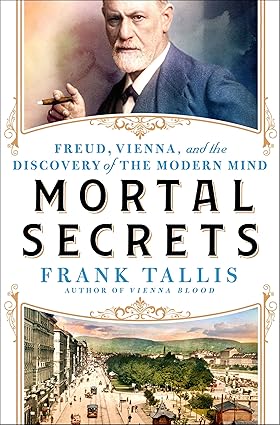
JP O’Malley Interviews Author Frank Tallis
“…is it possible to embrace Freud’s core ideas while also remaining critical of him? Tallis believes so. He claims Freud ‘was unquestionably a great writer, but he is often contradictory, and his ideas are generally not original.'”
The Book Gallery
A collection of conversations with Bookman editor Luke C. Sheahan and writers and authors of imagination and erudition. Click on the icon in the upper right corner of the video to see more episodes in this series or check out our YouTube page.


Did you hear? This month a generous supporter has offered to MATCH every gift up to $5k for the Kirktober campaign in support of the mission of @ubookman: https://buff.ly/PECA0Az.
@ubookman @NadyaWilliams81 "The past couple of years have been a time of seemingly endless jeremiads about the decline of reading, literacy, and books..in the midst of such chaos, @ubookman simply continues to review ‘books that build culture’—a mission to which I am honored to contribute.”
Shop through Creed and Culture Publishing