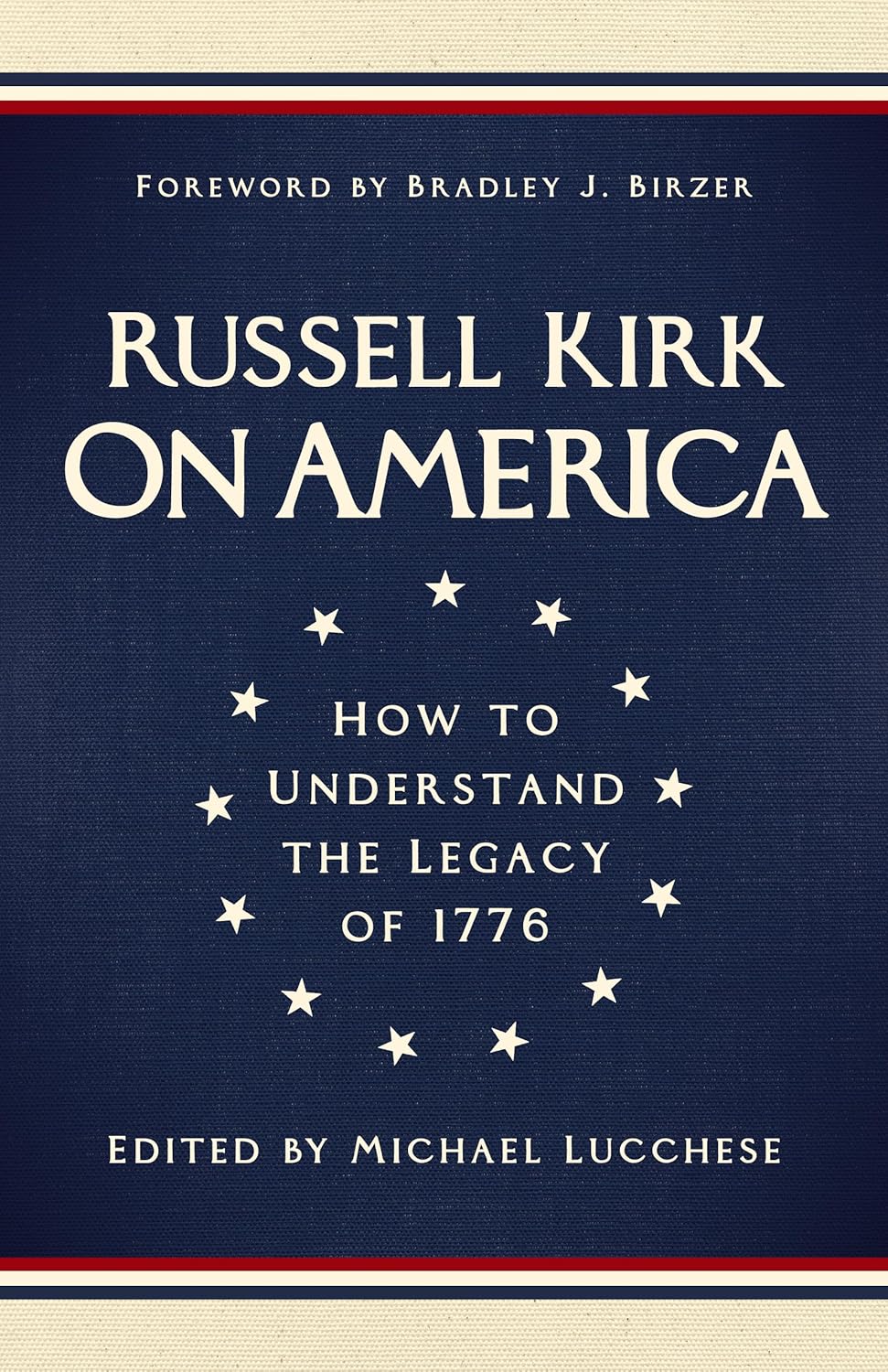
The University Bookman
Reviewing Books that Build Culture
Join Kirktober and help support the mission of the University Bookman
Each week the Bookman brings you fresh reviews of the books that build culture, and essays that enliven the Permanent Things. Last year nearly 90,000 visitors engaged with the Bookman’s reviews, all free of charge and with no advertising to disrupt the reading experience. Our writers are touching hearts and minds across the globe with their reviews, bringing wisdom, creativity, and beauty to bear on the most important conversations happening in literature and culture.
Would you consider a gift to help us continue this work?
If just 1 in 4 of our readers contributed $10, we’d dramatically increase our capacity to recruit the brightest young writers and tackle more books and topics, all with a Kirkian angle. We’ve set a goal of raising $20k this month in order to continue our mission. Exceeding this amount will allow us to expand our work even more.
If you love the Bookman, and read us with regularity, we’d greatly appreciate your generous support this month.
With gratitude,
Luke Sheahan, Ph.D., editor
The University Bookman
P.S. As a special thank you to all Bookman supporters this month, we’ll send you a link to an audio recording of Ex Tenebris, one of Kirk’s best ghostly short stories. We think you’ll really enjoy it.
Campaign Progress
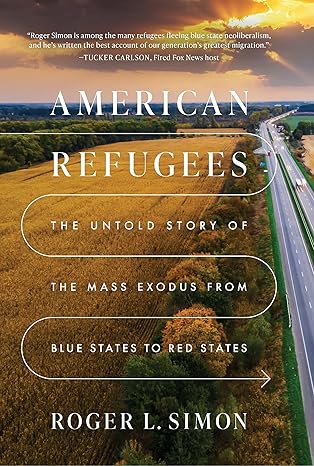
Political Exodus in America
“…we have in American Refugees a quite worthwhile and entertaining discussion of the experience of one refugee’s relocation from the most liberal of states to one of the most conservative, though conservative in ways that the author did not entirely anticipate.”
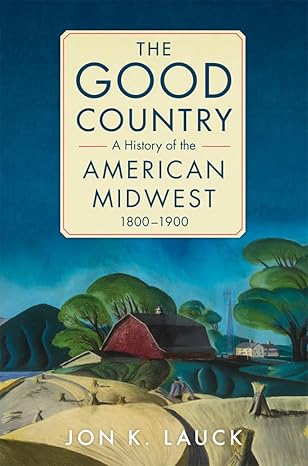
Can the United States Have a Good History?
“Midwesterners believed in Christianity, optimism, tolerance, local involvement, equality, and embracing hard work, including physical work, while avoiding luxury. They lived out their values by extensive reading, attending public lectures, and founding colleges and primary schools that taught character.”
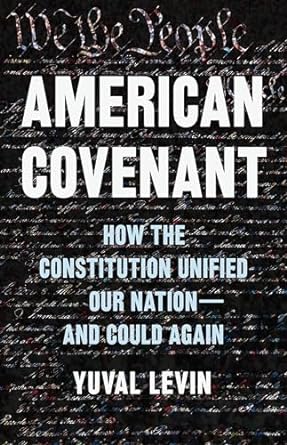
Yuval Levin’s Stirring Defense of the Constitution
“[Levin] believes that, far from being the source of our problems, the American Founding can teach us the best solution to our present discontent. To deal with the growing crisis of faith, he directs our attention to the wisdom at the heart of the Constitution.”
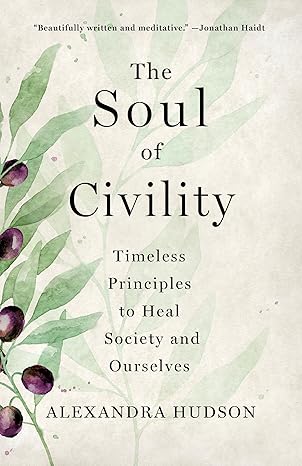
“Putting Civil Back in Civilization”
“Hudson urgently reminds us that if we cannot live civilly with one another, we may have reached the limits of our democratic ‘proposition,’ as Lincoln called it. Hudson has rightfully re-introduced civility into our vocabulary and, in doing so, raises an inspirational ideal and draws a ‘line-in-the-sand’ by which to judge behavior.”
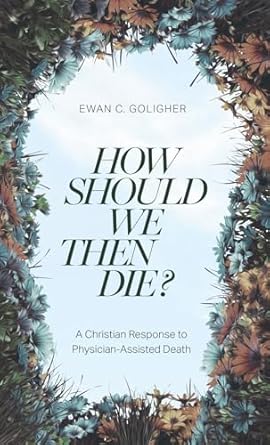
Here’s Why Not
“Goligher sets this Christian view against the secular view now reigning in healthcare: that humans have extrinsic value. To treat humans as creatures with extrinsic value—meaning they have value only for what they can do, not for what they are—is to treat humans as things that produce value as opposed to persons who are valuable in and of themselves.”
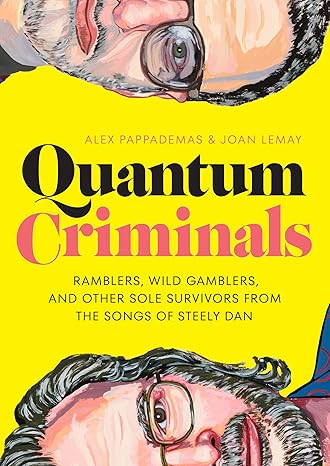
Gentlemen Losers
“Yet I suspect that one reason Steely Dan’s star has risen in our own day is that they cannot be exclusively claimed by cultural progressives. Whatever the personal convictions of Fagen and Becker might have been, their songs capture a certain temperamental conservatism, equal parts cynicism towards the promise of a brighter tomorrow and yearning for a sense of social order long past, that feels right at home in our age of fractured shabbiness. Combine this sensibility with the band’s relentless pursuit of aesthetic perfection, and you have a recipe for music that greatly appeals to a certain segment of young fogeys more indebted to T.S. Eliot than to Charlie Kirk.”
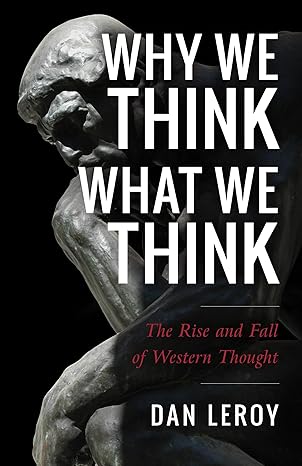
Thinking Ourselves into Oblivion
“Without formal and final causes… we have no access to the universal intelligible structures and purposes in the world. And without those, there is no possibility of meaningful philosophy.”
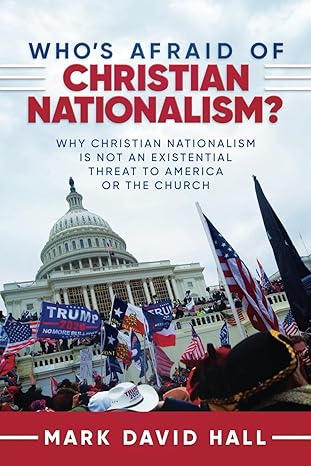
The “Christian Nationalism” Canard
“If the city and the soul are connected, as Russell Kirk affirmed, then what shapes the soul shapes the city, and vice versa, which means that vacating the public square entails transforming society…”
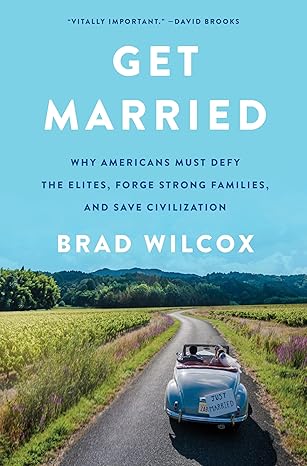
A Social Scientific Apologia for Marriage
“…Wilcox is here to do something unusual… He intuits a need for an updated social scientific apologia of marriage—something that champions marriage comprehensively from a social scientific perspective…”
The Book Gallery
A collection of conversations with Bookman editor Luke C. Sheahan and writers and authors of imagination and erudition. Click on the icon in the upper right corner of the video to see more episodes in this series or check out our YouTube page.


Did you hear? This month a generous supporter has offered to MATCH every gift up to $5k for the Kirktober campaign in support of the mission of @ubookman: https://buff.ly/PECA0Az.
@ubookman @NadyaWilliams81 "The past couple of years have been a time of seemingly endless jeremiads about the decline of reading, literacy, and books..in the midst of such chaos, @ubookman simply continues to review ‘books that build culture’—a mission to which I am honored to contribute.”
Shop through Creed and Culture Publishing