The University Bookman
Reviewing Books that Build Culture
Join Kirktober and help support the mission of the University Bookman
Each week the Bookman brings you fresh reviews of the books that build culture, and essays that enliven the Permanent Things. Last year nearly 90,000 visitors engaged with the Bookman’s reviews, all free of charge and with no advertising to disrupt the reading experience. Our writers are touching hearts and minds across the globe with their reviews, bringing wisdom, creativity, and beauty to bear on the most important conversations happening in literature and culture.
Would you consider a gift to help us continue this work?
If just 1 in 4 of our readers contributed $10, we’d dramatically increase our capacity to recruit the brightest young writers and tackle more books and topics, all with a Kirkian angle. We’ve set a goal of raising $20k this month in order to continue our mission. Exceeding this amount will allow us to expand our work even more.
If you love the Bookman, and read us with regularity, we’d greatly appreciate your generous support this month.
With gratitude,
Luke Sheahan, Ph.D., editor
The University Bookman
P.S. As a special thank you to all Bookman supporters this month, we’ll send you a link to an audio recording of Ex Tenebris, one of Kirk’s best ghostly short stories. We think you’ll really enjoy it.
Campaign Progress
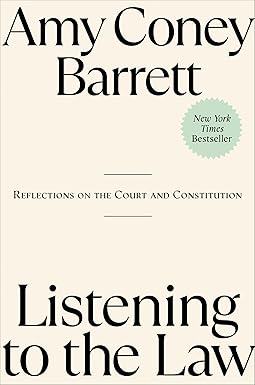
Listening to the Law, and Now Speaking It
“Justice Barrett thus roots an originalist mode of judging in history and tradition. Judging rightly is an inherently conservative endeavor: the judiciary’s very claim to review the work of the political branches draws each political act back to past writing, either in the Constitution or the United States Code. Keeping our politics within the scope of ordered liberty—and most importantly a written text—makes the judiciary the branch that preserves and tempers us in the face of the revolutionary instinct to throw off the so-called ‘dead hand of the past.’”
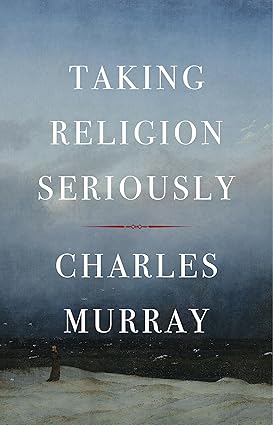
One Man’s Journey to Faith
“Regardless of one’s beliefs, Charles Murray’s [book] must be acknowledged as a notable work. It is a heartfelt account of one man’s (actually, one couple’s) acceptance of religious faith and of Christianity in particular, and while not a work of scholarship, it is informed by extensive reading and decades of thought. Like the work of C.S. Lewis, which inspired Murray’s turn toward Christianity, it is written in an admirably direct and accessible style.”
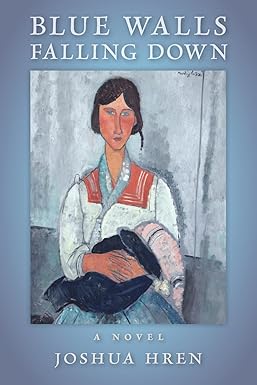
Yearning and Collapsing
“Joshua Hren has already demonstrated his mastery of probing and satirizing contemporary pathologies in this novel’s predecessor… which was also a tragic drama but filled with more comedic interludes. In this loose yet independent sequel, Hren focuses on three major characters whose broken lives exhibit three cultural phenomena…”
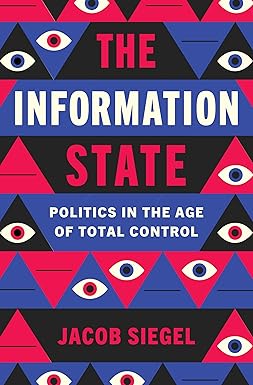
Our Lives in the Panopticon
“Sophisticated and pervasive information manipulation softens the target, and the target is we the people. The goal? Progressivism, of course…”

Plan a Visit Soon
“The pieces are set primarily at Hadas’s house in rural northern Vermont, and the house itself becomes the intersection where the tangible and intangible, the present and past, even prose and poetry, inextricably blend.”
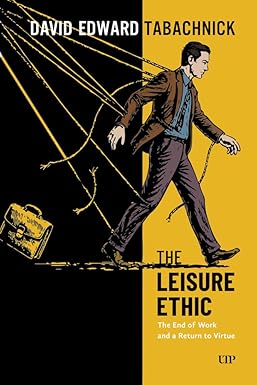
Preparing for Leisure
“If modern technology is making it increasingly possible to have the opportunities for leisure that Athenian citizens had, then there has never been a better time to rediscover this forgotten ideal.”
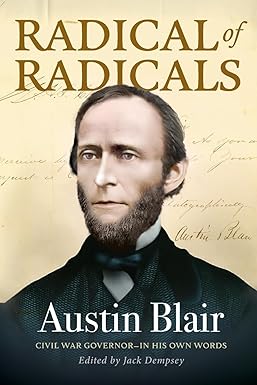
Michigan’s Neglected Civil War Governor
“Blair, as Dempsey notes, certainly fit the bill of a radical. The notion that slavery’s expansion needed to cease—the Lincolnian proposition—was far too mild for him; he wanted to kill slavery where it was, and he nurtured a burgeoning community of like-minded institutions—civic, educational, political, and religious—in Michigan.”
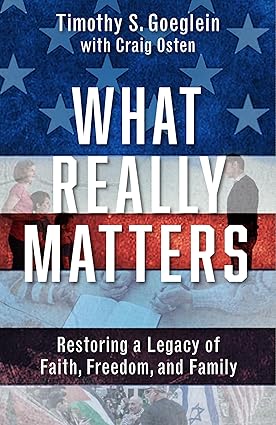
The Enduring Sources of the Permanent Things
“The result is less a polemic against the present than a gentle yet firm invitation to remember what we have nearly forgotten—that the good life is not a solitary pursuit of personal authenticity but a shared enterprise of commitment, sacrifice, and mutual regard. What makes the book so especially resonant is its refusal to treat these themes as abstract ideals.”
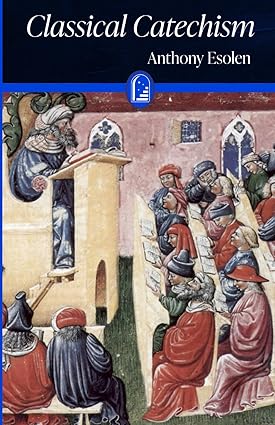
Talking Classical Education
“It is an introduction to the pedagogical life of a classical school. It is a philosophical argument for a particular approach to being a classical teacher. It is a work of cumulative experiences which manifest in teacherly wisdom. And it is a treatise aimed at critiquing the Modern Industrial Model of Education which has characterized the last several decades of American schooling.”
The Book Gallery
A collection of conversations with Bookman editor Luke C. Sheahan and writers and authors of imagination and erudition. Click on the icon in the upper right corner of the video to see more episodes in this series or check out our YouTube page.


@ubookman Plus every donor will receive a new audio recording of Kirk's "Ex Tenebris," a great ghostly listen! Help @ubookman reach $20k and continue to review the books that build culture: https://buff.ly/MLnMl4e
Did you hear? This month a generous supporter has offered to MATCH every gift up to $5k for the Kirktober campaign in support of the mission of @ubookman: https://buff.ly/PECA0Az.
Shop through Creed and Culture Publishing