

What We Should Have Known About Pandemics and Politics Before COVID
Making Sense of Diseases and Disasters: Reflections on Political Theory from Antiquity to the Age of COVID Edited by Lee Trepanier. Routledge, 2022. Hardcover, 238 pages, $170. Reviewed by Richard Gunderman. One of the biggest problems with new publications is their...
Wielding Weighty Words to Salvage the World
The Fortunes of Permanence: Culture and Anarchy in an Age of Amnesia By Roger Kimball. St. Augustine’s Press, 2022. Paperback, 360 pages, $26.00. Reviewed by David Hein. Not unlike a prime Bordeaux, this collection of essays, originally published in hardcover in...
When Virginians Ruled (or, Against Political Nostalgia)
The Jeffersonians: The Visionary Presidencies of Jefferson, Madison, and Monroe By Kevin R. C. Gutzman. St. Martin’s Press, 2022. Hardcover, 608 pages, $37. Reviewed by Adam L. Tate. It seems that in every age, the politically frustrated harken back to better days....
The Inspiration We Need
By Strange Ways: Theologians and Their Paths to the Catholic Church Edited by Jonathan Fuqua and Daniel Strudwick. Ignatius Press, 2022. Paperback, 300 pages, $19.95. Reviewed by Thomas Griffin. Conversion, the redirecting of one’s life towards God and truth, is the...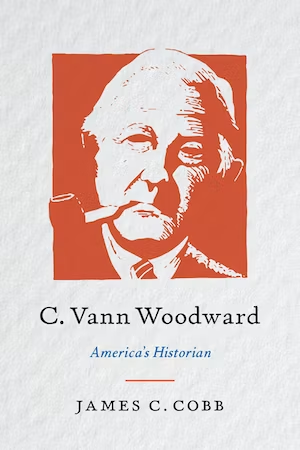
A Very American Historian
C. Vann Woodward: America’s Historian By James C. Cobb. University of North Carolina Press, 2022. Hardcover, 504 pages, $37.50. Reviewed by John C. Chalberg. Should C. Vann Woodward be regarded as America’s historian? Given his career and this biography, a more...
The Bookman could use your support this "Kirktober." We are a conservative book review that was founded by Russell Kirk in 1960. Last year, we reached over 90,000 readers. We don't have ads, paywalls, or subscriptions, so we rely on donors for support: