Welcome Home to the Russell Kirk Center
Strengthening America’s Tradition of Order, Justice & Freedom
The Russell Kirk Center for Cultural Renewal aims to recover, conserve, and enliven those enduring norms and principles that Russell Kirk (1918–1994) called the Permanent Things. Explore the Center’s programs, publications, and fellowships and join with us to continue Kirk’s work to renew our culture and redeem our time.
Sign up to receive our semiannual newsletter, Permanent Things.
At the Kirk Center
Highlights
New Book: Russell Kirk’s On America: How to Understand the Legacy of 1776
John Engler named as Chairman of the Kirk Center’s Board
Classic Kirk essay: On the Constitution: “A Revolution Not Made, But Prevented”
Visiting Scholar Daniel Pitt discusses Disraeli and the Conservative Tradition
Kirktober Campaign for The University Bookman — Donate Now
Events
November 11: Academic Freedom Lecture, with Dr. Samuel Goldman — Hope College
November 19: Richard D. McLellan Prizes, with Eugene Volokh — The National Press Club
December 2: Saint John Henry Newman Against Liberalism Lecture, with Fr. Gerald Murray — Fordham University
Available now from Creed & Culture
Mecosta House Books
Explore Mecosta House
At Mecosta House, we aim to combine with the Kirk Center’s programs to foster an intellectual community dedicated to exploring the wisdom of our predecessors while forging a new conservative humanism.
We hope our readers will be edified by the titles we publish, and that they will strengthen the programs and the courses we will introduce at the Kirk Center as part of our Institute of Conservative Studies. David Hein’s Teaching the Virtues offers a fresh look at a perennial educational aim—encouraging virtue in the next generation, and we are proud to present it as our first book.
From the University Bookman
Confronting our Current Digital Malaise
“Luke Burgis has written an interesting book exploring the tension between belonging and differentiation.”
Latest Pieces
A Secular Confession
“The story that she tells in these pages is one of a brewing and ongoing civil war, a civil war not between left and right in America, but a civil war within the Democratic Party.”
Ames, Hamilton, Marshall: Russell Kirk’s Other Founding Federalists
“The Federalist party, of course, is no more. It barely lasted past the fiftieth anniversary of American independence. But, as Russell Kirk demonstrated throughout his work, its conservative vision remains one of the most profound expressions of the meaning of the American Founding itself. Its adherents cannot simply be dismissed as retrograde aristocrats—they were patriots who understood that ‘order is the first need of all.’”
Going West, Berlin Style
“How did this fifty-year period and 33-year separation shape West Berlin into a city? How did the identity of this city evolve over time from simply being the Allied stronghold in Communist territories into a flourishing city in its own right? And what were the limitations that this identity imposed on the city’s day-to-day existence and its local culture?”
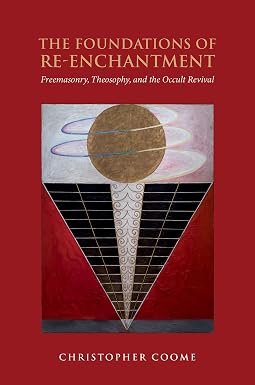
More Religion, Less Spiritualism, Please
“But there is nothing new about the ‘spiritual but not religious’ crowd: they are, in a certain, degraded sense, merely the spiritual and intellectual heirs of the occult revivalists who popped up in the late nineteenth and early twentieth centuries…”
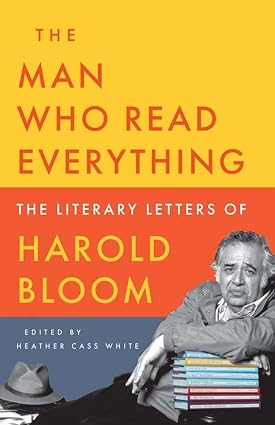
Letters of a Literary Legend
“These letters further confirm that Bloom, a guardian of our Western literary heritage, was one of the most important minds of the past half century.”
About the Bookman
For six decades, the University Bookman, founded by Russell Kirk, has identified and discussed those books that diagnose the modern age and support the renewal of culture and the common good. Currently published online, the Bookman continues its mission of examining our times in light of the Permanent Things that make us human.
Subscribe for all Bookman Reviews and Essays