
Welcome Home to the Russell Kirk Center
Strengthening America’s Tradition of Order, Justice & Freedom
The Russell Kirk Center for Cultural Renewal aims to recover, conserve, and enliven those enduring norms and principles that Russell Kirk (1918–1994) called the Permanent Things. Explore the Center’s programs, publications, and fellowships and join with us to continue Kirk’s work to renew our culture and redeem our time.
Sign up to receive our semiannual newsletter, Permanent Things.
At the Kirk Center
Highlights
John Engler named as Chairman of the Kirk Center’s Board
Classic Kirk essay: “Repeating History”
Events
March 3 – 24: Online Master Class — The Perennial Edmund Burke
Mecosta House Books
Explore Mecosta House
At Mecosta House, we aim to combine with the Kirk Center’s programs to foster an intellectual community dedicated to exploring the wisdom of our predecessors while forging a new conservative humanism.
We hope our readers will be edified by the titles we publish, and that they will strengthen the programs and the courses we will introduce at the Kirk Center as part of our School of Conservative Studies. David Hein’s Teaching the Virtues offers a fresh look at a perennial educational aim—encouraging virtue in the next generation, and we are proud to present it as our first book.
From the University Bookman
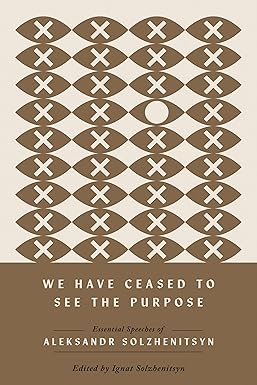
Solzhenitsyn and the Spirituality of Self-Limitation
“…any so-called ‘progress’ or advancement of society must begin, always and everywhere, in the soul of the individual—not in the revolutionary fantasies of radical social reformers, whose aims work to dissolve the spiritual bonds that underlie the traditional fabric of human communities.”
Latest Pieces
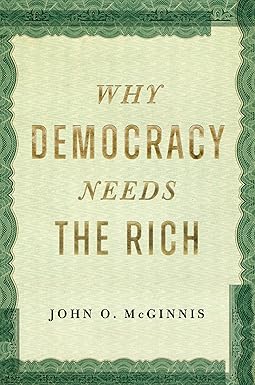
How Should We Think About Inequality?
“The book’s ultimate claim is not that the rich are virtuous, but that a democracy hostile to wealth will not become more equal—it will become more centralized, more bureaucratic, and less free. In that sense, McGinnis’s argument is less a defense of inequality than a defense of constitutional humility.”
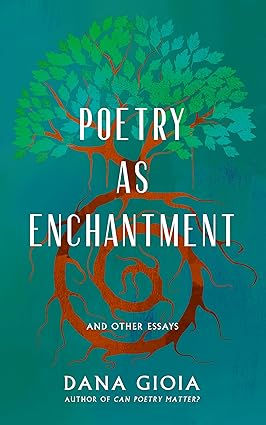
Enchanting Criticism: Dana Gioia as Literary Critic
“Gioia’s latest book is a testament to the persistence of authentic criticism in an age suspicious of and even hostile to literary values.”
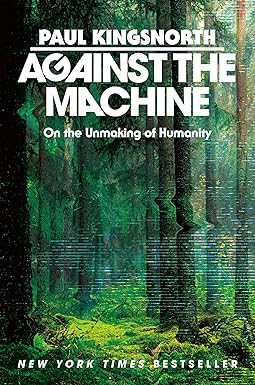
The Machine or the Garden?
“What Kingsnorth brilliantly exposes in Against the Machine is how the progressive vision of scientific, industrial, and technological progress is actually destroying the wisdom of the past in its merciless pursuit of perfection. Kingsnorth reminds us of the great taboo of modernity: ‘There is no such thing as a perfect society, and anyone who tries to build one will either go mad or become a tyrant.’”
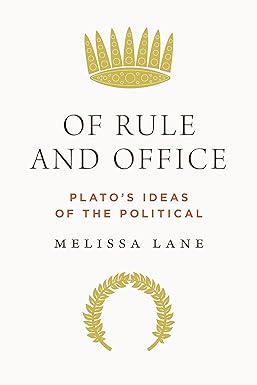
What Plato Meant
“…Princeton University philosopher and political theorist Melissa Lane explores Plato’s notion of rule and governorship, attempting to refresh the humanistic, liberal reading of Plato’s political theory.”
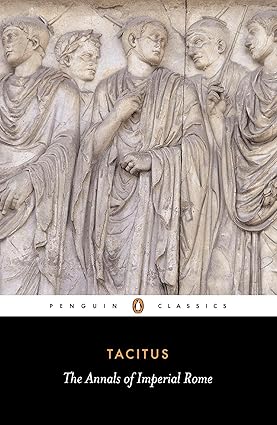
After the Republic: Tacitus on the End of a Free State
“…you don’t really have to ‘wonder’ if you’ve lost the republic… This is one of the lessons of the first few paragraphs of Tacitus’ Annals. In this dour, grumpy review of the first decades of the Roman Empire, Tacitus gives us seven signs that the republic is well and truly dead.”
About the Bookman
For six decades, the University Bookman, founded by Russell Kirk, has identified and discussed those books that diagnose the modern age and support the renewal of culture and the common good. Currently published online, the Bookman continues its mission of examining our times in light of the Permanent Things that make us human.
Subscribe for all Bookman Reviews and Essays