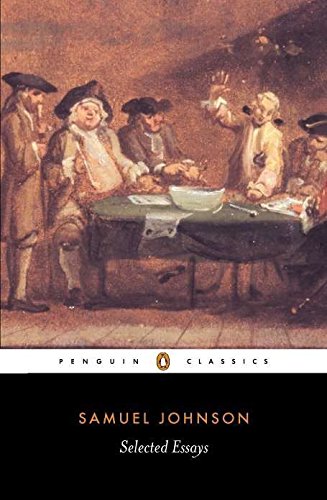
James V. Schall, S. J. The second essay of Samuel Johnson’s entries in The Rambler was published on Saturday, March 24, 1750. The essay begins with what must be called a general experience of all mankind, thus including one’s own self-knowledge: “The mind of man is...
Aristotelian Interpretations by Fran O’Rourke. Irish Academic Press, 2016. Hardcover, 376 pages, $75. JAMES V. SCHALL, S. J. “The power of symbolic signification is possible only because the human mind has an unlimited openness to the entirety of reality, and can thus...
In Anne Husted Burleigh’s book, A Journey up the River, she writes of the human home, its formation and functioning. It circles around three objects, each of which, in every human home, has its own history. These are the bed, the table, and the desk. The crafting of...
On Looking: A Walker’s Guide to the Art of Observation by Alexandra Horowitz. New York: Scribner 2011. Paperback, 320 pages, $16.“We walk the same block as dogs yet see different things. We walk alongside rats though each of us lives in the dusk of the other. We walk...
On the front page of L’Osservatore Romano, English, for November 4, 2016, we find two headlines occasioned by the Holy Father’s trip to Sweden on the five hundredth anniversary of the Reformation. One headline reads: “On the Path toward Full Communion,” while the...
Liberalism, Socialism, and Subordination
Bruce P. Frohnen on "The Windmills of Sancho Panza" by Tage Lindbom, translated by Oliver Fotros, introduction by Claes G. Ryn.
"Hemingway is blind to the preternatural dimension of reality. Nothing in Hemingway speaks to human expectations or answers our deepest human desires—creatures ill at ease in time and seeking the eternal. In Hemingway there is no wonder or awe toward creation."