The University Bookman
Reviewing Books that Build Culture
Join Kirktober and help support the mission of the University Bookman
Each week the Bookman brings you fresh reviews of the books that build culture, and essays that enliven the Permanent Things. Last year nearly 90,000 visitors engaged with the Bookman’s reviews, all free of charge and with no advertising to disrupt the reading experience. Our writers are touching hearts and minds across the globe with their reviews, bringing wisdom, creativity, and beauty to bear on the most important conversations happening in literature and culture.
Would you consider a gift to help us continue this work?
If just 1 in 4 of our readers contributed $10, we’d dramatically increase our capacity to recruit the brightest young writers and tackle more books and topics, all with a Kirkian angle. We’ve set a goal of raising $20k this month in order to continue our mission. Exceeding this amount will allow us to expand our work even more.
If you love the Bookman, and read us with regularity, we’d greatly appreciate your generous support this month.
With gratitude,
Luke Sheahan, Ph.D., editor
The University Bookman
P.S. As a special thank you to all Bookman supporters this month, we’ll send you a link to an audio recording of Ex Tenebris, one of Kirk’s best ghostly short stories. We think you’ll really enjoy it.
Campaign Progress
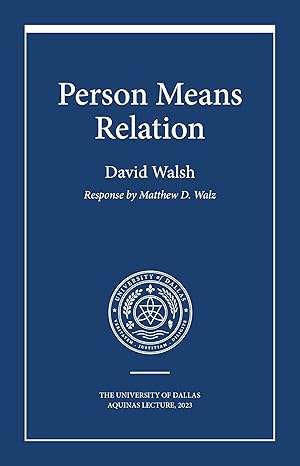
Catholic Zen
“Walsh’s philosophy is timely. For the Christian, it’s imperative to try to understand the mystery of the Trinity and always will be, so theology of the person is destined to be a never-completed project. For everybody else, the question of the person has invaded our daily lives. Invaded is the wrong word, of course. The person is always there, but occasionally we glimpse deeply the persons that are woven into our lives. Disputations on abortion and euthanasia reduce to warring conceptions of the person, and now artificial intelligence challenges commonplace understandings of persons and relationships.”
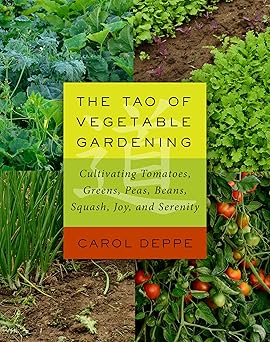
Outlining Sanity in the Garden
“…there are those books like The Tao of Vegetable Gardening by Carol Deppe, which is a beautiful hybrid: mostly how-to gardening advice, but laced with a meditational attitude that, though rarely overt, informs the book as a whole… [It] is part of a rich bed of American gardening literature that, in the words of M.E. Bradford, mixes ‘practical agricultural advice and moral reflection.’”
Holy Living After the Fall
“At the center of this work is the sense that the world is essentially irredeemable. Individual persons assuredly may be saved, and to the attainment of this end, we all are summoned; but the world itself, with all its works and uses, is the natural property of the Devil, and we are well advised to keep away from it.”

Frontier Fiction at Its Best
“This classic frontier story—of the fostered orphan who escapes the baddies who killed his family and who returns to wreak vengeance upon them—is enriched by a vivid depiction of Comanche culture and traditional way of life and by narrative motifs whose roots are deep in the soil of myth and fable…”
The Dangers of Modern Nationalism
“For Hayes, what he describes as the ‘ecumenical liberalism’ of the middle decades of the nineteenth century—respect for individual rights, freedom of speech, free trade, and a growing prosperity—were threatened by the forces of materialism, militarism, and scientific racism which he dated as emerging in the 1870s.”
Education in the Light of Glory
“For those who already know and love Kern as a speaker and writer, this book will be a rich delight. Its insights reward the reader on every page. Those not familiar with Kern, however, may be taken aback by the extent of his reveling in layered analogies, intricate structures, and ultimate mysteries.”
Connecting with Aquinas, Connecting with Ourselves
“Attempting to summarize the thoughts of one of the Church’s most prodigious figures, let alone connect them to contemporary culture, is no small task and Keenan knows it. His book does not pretend to be more than it is: a new lens to read Aquinas through.”
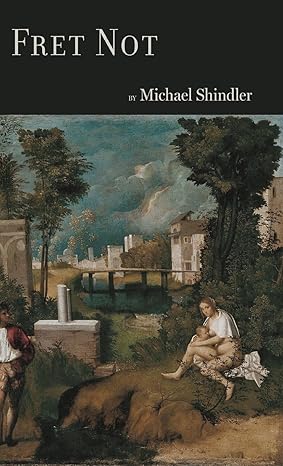
Et in Arcadia Ego
“Poetry, particularly poetry of this kind, has been proclaimed dead too many times to count. Still, elect souls will hear the music of the pan-pipes on the wind.”
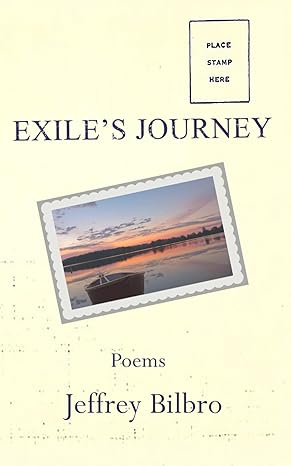
Making It Home
“The perils and wonders of the journey home pervade Bilbro’s entire collection, through a variety of verse forms and subjects, many of which are seemingly mundane, as in ‘Listening to the Iliad while Raking Leaves…'”
The Book Gallery
A collection of conversations with Bookman editor Luke C. Sheahan and writers and authors of imagination and erudition. Click on the icon in the upper right corner of the video to see more episodes in this series or check out our YouTube page.


@ubookman Plus every donor will receive a new audio recording of Kirk's "Ex Tenebris," a great ghostly listen! Help @ubookman reach $20k and continue to review the books that build culture: https://buff.ly/MLnMl4e
Did you hear? This month a generous supporter has offered to MATCH every gift up to $5k for the Kirktober campaign in support of the mission of @ubookman: https://buff.ly/PECA0Az.
Shop through Creed and Culture Publishing