The University Bookman
Reviewing Books that Build Culture
Join Kirktober and help support the mission of the University Bookman
Each week the Bookman brings you fresh reviews of the books that build culture, and essays that enliven the Permanent Things. Last year nearly 90,000 visitors engaged with the Bookman’s reviews, all free of charge and with no advertising to disrupt the reading experience. Our writers are touching hearts and minds across the globe with their reviews, bringing wisdom, creativity, and beauty to bear on the most important conversations happening in literature and culture.
Would you consider a gift to help us continue this work?
If just 1 in 4 of our readers contributed $10, we’d dramatically increase our capacity to recruit the brightest young writers and tackle more books and topics, all with a Kirkian angle. We’ve set a goal of raising $20k this month in order to continue our mission. Exceeding this amount will allow us to expand our work even more.
If you love the Bookman, and read us with regularity, we’d greatly appreciate your generous support this month.
With gratitude,
Luke Sheahan, Ph.D., editor
The University Bookman
P.S. As a special thank you to all Bookman supporters this month, we’ll send you a link to an audio recording of Ex Tenebris, one of Kirk’s best ghostly short stories. We think you’ll really enjoy it.
Campaign Progress
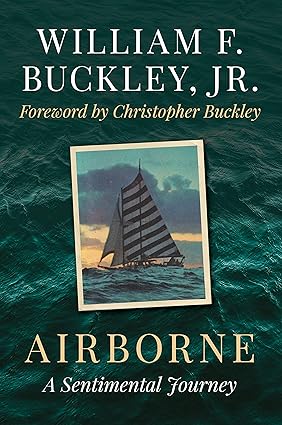
Buckley at 100: At Sea with William F. Buckley Jr.
“An elegant jet-setter with a flair for literary journalism, Buckley had few rivals in the art of travel writing, especially when it came to sailing. A master storyteller, he adeptly wove devices of fiction together with reportage to craft entertaining narratives full of exuberance and authority.”
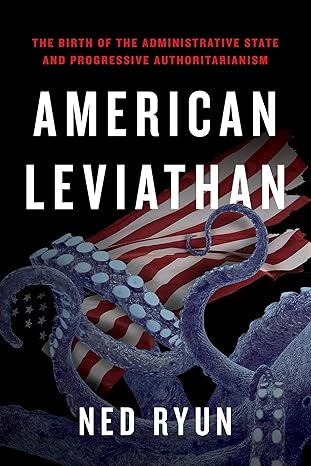
Roadmap for Downsizing the Administrative State
“Ryun begins by describing the ‘leviathan’ that has overtaken our democracy. It is crucial to understand that the administrative state is not merely a costly and wasteful but essentially innocuous excess of bureaucracy: it is, rather, an ‘unelected, detached, powerful bureaucracy’ that now controls most of our nation’s legislative, executive, and judicial functions, and as such it represents ‘nothing less than a regime change against and over the Constitution of 1787.’
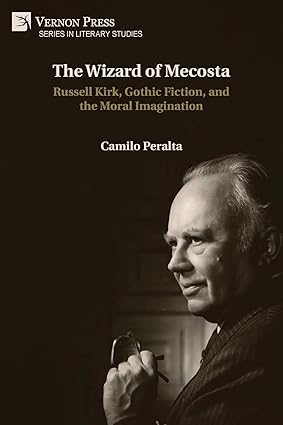
To Awaken the Uneasy Sleeper: New Vistas on Russell Kirk’s Fiction
“…Mr. Peralta offers the first full-length analysis of Kirk’s fiction, noting that it is all of a piece with the overall philosophy of the author’s life and work, all reflecting the moral imagination.”
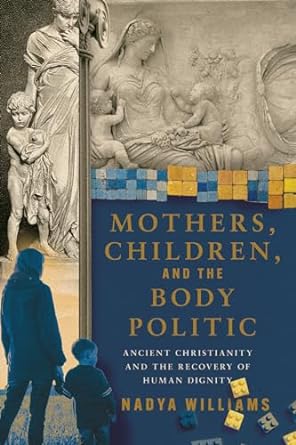
Halting the Assembly Line Life
“Williams’s consideration of our culture’s denigration of life is a deep and thorough one, as she considers not merely overt manifestations but even subtle messaging…”
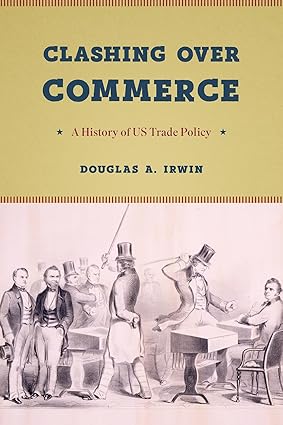
Looking at U.S. Trade Policy Through a Historical Lens
“…it is more important than ever that the electorate have a clear-eyed guide to follow, one that does not engage in fear mongering about the end of neoliberalism or the return to a mercantilist economic system, but that provides readers with ample context and useful anecdotes.”
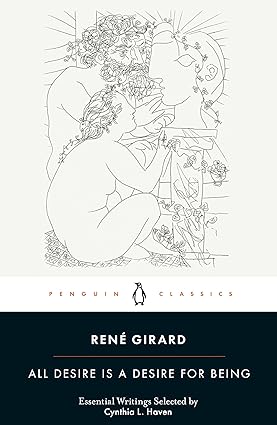
The Mystery of Imitation
“…Haven draws attention to the relevance of Girard’s writings for our times. When reading many of the other chapters she chose, I could not help thinking about contemporary American social and political disorders. In ‘The Totalitarian Trial’ and ‘Retribution,’ for example, Girard argues Job’s alleged friends, like Stalin’s interrogators, are really representatives of the community demanding Job’s consent to his own persecution. The unity of the community hinges on Job’s willingness to confess his ‘crimes.’ Only then can he be killed and forgotten, ‘unpersoned,’ as Orwell would say. A similar dynamic is at work in cancel culture.”
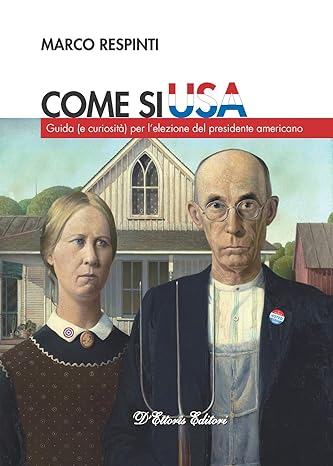
An Italian Apologia for the American Electoral System
“The purpose of the book is to understand the reasons for the intricate electoral system, which has proven to be remarkably stable and orderly throughout American history. Mainly addressed to an Italian audience that is naturally less familiar with American voting, it can also be useful for Americans to understand how the whole design is ordered to secure a fair system against totalitarian democracy.”
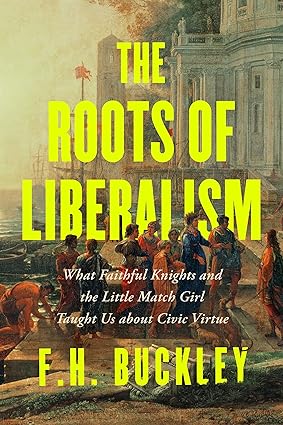
The Centrality of Civic Virtue
“A just polity grows as we acquire a moral sense, which fosters attitudes and actions of benevolence toward others…”
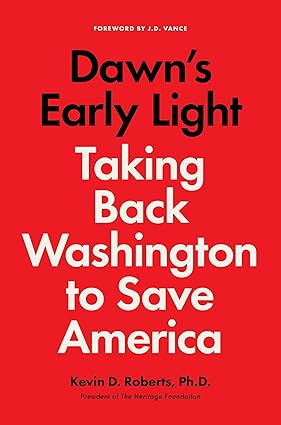
Revivifying the Conservative Movement
“Roberts has perceived the deep and fundamental crisis within the American body politic, and that crisis is a spiritual crisis.”
The Book Gallery
A collection of conversations with Bookman editor Luke C. Sheahan and writers and authors of imagination and erudition. Click on the icon in the upper right corner of the video to see more episodes in this series or check out our YouTube page.


@ubookman Plus every donor will receive a new audio recording of Kirk's "Ex Tenebris," a great ghostly listen! Help @ubookman reach $20k and continue to review the books that build culture: https://buff.ly/MLnMl4e
Did you hear? This month a generous supporter has offered to MATCH every gift up to $5k for the Kirktober campaign in support of the mission of @ubookman: https://buff.ly/PECA0Az.
Shop through Creed and Culture Publishing