
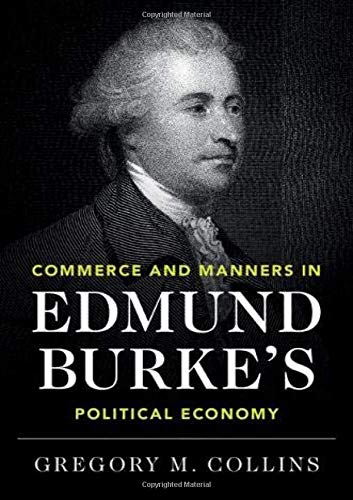
Burke’s Mannered Economics
Commerce and Manners in Edmund Burke’s Political Economy by Gregory M. Collins. Cambridge University Press, 2020. Hardcover, 578 pages, $50. Reviewed by John G. Grove Only someone like Edmund Burke could find in the “motions of England’s internal grain trade” anything...
How the Vikings Saw Themselves
Children of Ash and Elm: A History of the Vikings by Neil Price. Basic Books, 2020. Hardcover, 624 pages, $35. Reviewed by Clayton Trutor When I stroll through the stacks of a college library, I often find my way over to the DL60s—History of Northern Europe: Earliest...
Skewering the Revolutionary Consciousness
Heart of a Dog by Mikhail Bulgakov Translated by Mirra Ginsburg. Grove Press, 1968. Paperback, 123 page, $16. By Katya Sedgwick In June, when Black Lives Matter riots erupted in American cities, conservatives began rereading Tom Wolfe for insides on race relations. I,...
The Enlightenment’s Critics
Critics of Enlightenment Rationalism edited by Gene Callahan and Kenneth B. McIntyre. Palgrave Macmillan, 2020. Hardcover, 313 pages, $110. Reviewed by David Coates Surveying the French Revolution, Edmund Burke presented an apparent paradox: “The pretended rights of...

Kirk saw poetry, fiction, tradition, and restraint as essential to understanding America and preserving its character. In his review of "On America," @cjscalia explores Kirk’s vision of the founding, statesmanship, literature, and the enduring ideas that have shaped the republic.