The University Bookman
Reviewing Books that Build Culture
Join Kirktober and help support the mission of the University Bookman
Each week the Bookman brings you fresh reviews of the books that build culture, and essays that enliven the Permanent Things. Last year nearly 90,000 visitors engaged with the Bookman’s reviews, all free of charge and with no advertising to disrupt the reading experience. Our writers are touching hearts and minds across the globe with their reviews, bringing wisdom, creativity, and beauty to bear on the most important conversations happening in literature and culture.
Would you consider a gift to help us continue this work?
If just 1 in 4 of our readers contributed $10, we’d dramatically increase our capacity to recruit the brightest young writers and tackle more books and topics, all with a Kirkian angle. We’ve set a goal of raising $20k this month in order to continue our mission. Exceeding this amount will allow us to expand our work even more.
If you love the Bookman, and read us with regularity, we’d greatly appreciate your generous support this month.
With gratitude,
Luke Sheahan, Ph.D., editor
The University Bookman
P.S. As a special thank you to all Bookman supporters this month, we’ll send you a link to an audio recording of Ex Tenebris, one of Kirk’s best ghostly short stories. We think you’ll really enjoy it.
Campaign Progress
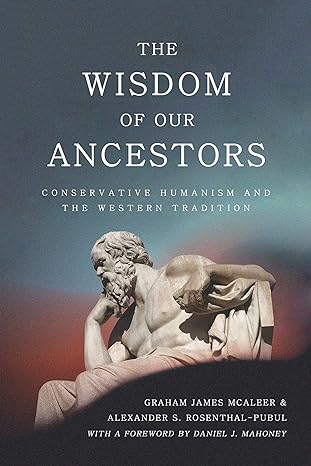
Conservative Humanism for a Postmodern Age
“…[the] authors deserve praise for demonstrating that conservatism is not a mere ideology: it is a serious philosophical position.”
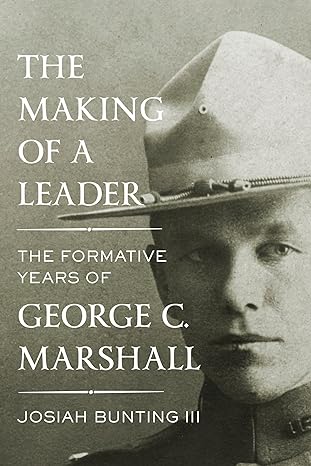
The Leadership of George Marshall
“…this study of the formation of General George C. Marshall would have benefited from even more time devoted to both its form and its content.”
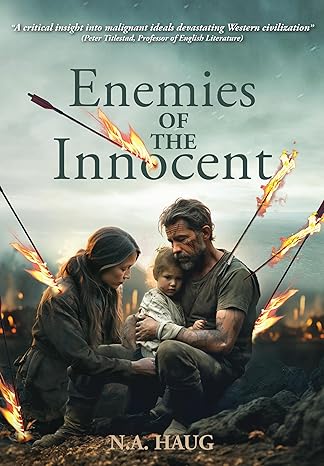
We Still Need Family, Religion, and Tradition
“In the end… it always comes down to the ancient story of secular humanism versus Christian belief. Is there room for yet another book on this theme? Of course there is, and there always will be, so long as fallen man remains fallen.”
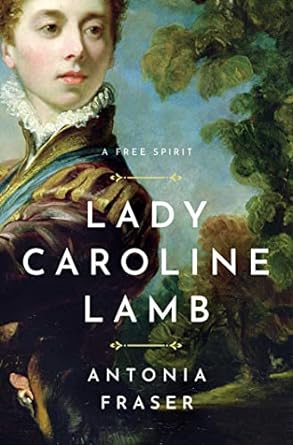
The Woman Who Loved Lord Byron
“Caroline’s life, we might say, was a real-life embodiment of the Byronic hero or heroine.”

Help Yourself
“All Shrier does—and does well—is to put into words, with ample sourcing, the feelings parents have been sharing with each other online and at the morning bus stop. The kids aren’t growing up. They’re a mess. And so are the therapists. “
The “Art of Being” and “The Art of Becoming”
“For Wilson… the best poems are seasoned reflections that develop in waves and ‘become’ informed by faith…”
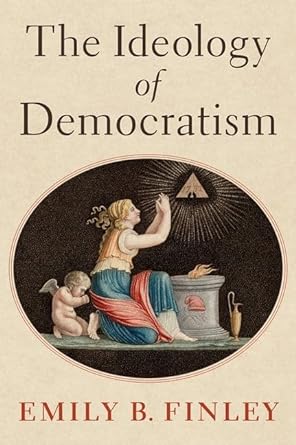
The Paradoxical Ideology
“Rousseau’s ideas have influenced both theorists and practitioners of democracy, such as Thomas Jefferson, Woodrow Wilson, George W. Bush, John Rawls, Jürgen Habermas, and Jacques Maritain. For Finley, the common thread in this group is belief in the ideology of democratism. For each of these figures, democracy is perceived as the ultimate end for society, akin to religious salvation, and only an elite-controlled oligarchy can represent society’s ‘general will.’ The irony is that this oligarchy employs undemocratic means in the name of democracy to achieve its objectives.”
Democratism and False Equivalence
“Finley argues that advocates of ‘democratism’ have always argued for democracy not as a regime of popular government but as a set of political norms of enlightened public sharing commitments to further liberation from traditional bonds.”
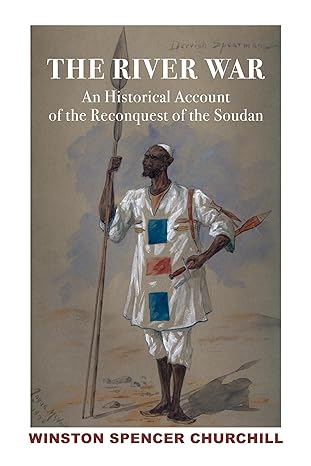
Churchill in His Element
“The River War was not just an adventure for Churchill; it was a foundation for his burgeoning thoughts on the strategy of war.”
The Book Gallery
A collection of conversations with Bookman editor Luke C. Sheahan and writers and authors of imagination and erudition. Click on the icon in the upper right corner of the video to see more episodes in this series or check out our YouTube page.


Did you hear? This month a generous supporter has offered to MATCH every gift up to $5k for the Kirktober campaign in support of the mission of @ubookman: https://buff.ly/PECA0Az.
@ubookman @NadyaWilliams81 "The past couple of years have been a time of seemingly endless jeremiads about the decline of reading, literacy, and books..in the midst of such chaos, @ubookman simply continues to review ‘books that build culture’—a mission to which I am honored to contribute.”
Shop through Creed and Culture Publishing