The University Bookman
Reviewing Books that Build Culture
Join Kirktober and help support the mission of the University Bookman
Each week the Bookman brings you fresh reviews of the books that build culture, and essays that enliven the Permanent Things. Last year nearly 90,000 visitors engaged with the Bookman’s reviews, all free of charge and with no advertising to disrupt the reading experience. Our writers are touching hearts and minds across the globe with their reviews, bringing wisdom, creativity, and beauty to bear on the most important conversations happening in literature and culture.
Would you consider a gift to help us continue this work?
If just 1 in 4 of our readers contributed $10, we’d dramatically increase our capacity to recruit the brightest young writers and tackle more books and topics, all with a Kirkian angle. We’ve set a goal of raising $20k this month in order to continue our mission. Exceeding this amount will allow us to expand our work even more.
If you love the Bookman, and read us with regularity, we’d greatly appreciate your generous support this month.
With gratitude,
Luke Sheahan, Ph.D., editor
The University Bookman
P.S. As a special thank you to all Bookman supporters this month, we’ll send you a link to an audio recording of Ex Tenebris, one of Kirk’s best ghostly short stories. We think you’ll really enjoy it.
Campaign Progress
The Christian and Classical Roots of American Order
“When claiming the heritage of the traditional rights of Englishmen, Americans were not claiming mere privileges of political or national affiliation, but natural rights born of moral constraints upon the powers of the sovereign…”
Recovering the Founders’ Constitutional Order
“The founders, in their affirmation of the rule of law and the principle of consent, resoundingly rejected modernity’s embrace of unlimited and largely arbitrary state power. Such a rejection depends ultimately on man being made in the image and likeness of the Christian creator God…”
In the Details There Is No Devil
“…the book offers other important lines of evidence for gospel reliability, as well as a look at how early Christians discerned the meaning of what Jesus taught.”
Natural Law in the Protestant Tradition
“Jensen’s recent book… makes an important contribution to the aforementioned Aufklärung of Protestant natural law, particularly for the way in which it situates the Wittenberg reformer’s various statements about natural law in historical and polemical context rather than painting a picture of… seamless development…”
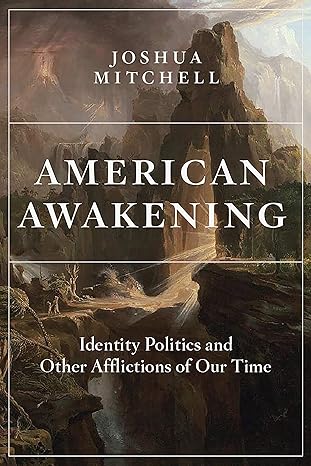
Identity Politics as Ersatz Religion
“As Mitchell sees it, there is only one path back from the ‘debilitating pathology’ of identity politics. It is for a community of thoughtful individuals to build, or rebuild, a society of honest ‘face-to-face’ relationships and a ‘politics of competence,’ and thereby restore a society in which individuals are judged on virtue, merit, and conduct rather than affiliation with one or more distinct identity groups.”
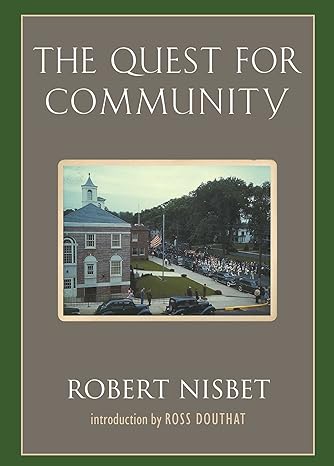
From The Quest for Community to the Restoration of Authority
“This is the great task of contemporary politics for Nisbet and for us: combining civic and social harmony with a political unity that respects pluralism as such.”
The Quest for Community at 70
“Democracy, as Nisbet imagined it, was not the opposite of fascism and communism, but, in its essence, possibly as totalitarian as either, just in a kinder, more gentle fashion.”
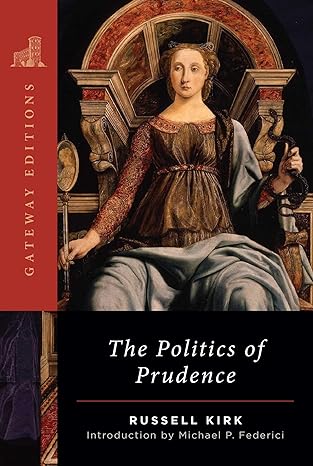
Kirk 101: The Politics of Prudence
“The vision of Politics of Prudence is as an inoculation against the ‘sham religion and sham philosophy’ of ideology. It is not a better ideology that we need, but rather none at all.”
The Prophet of Imprudence
“As the conservative mind is again on the defensive in America… The Politics of Prudence suggests that no less than the imprudence of conservatives is much to blame for the latest rout. Thirty years ago, few conservatives wanted to hear such a message. Today it calls out as a testament to what went wrong and a corrective for what’s to come.”
The Book Gallery
A collection of conversations with Bookman editor Luke C. Sheahan and writers and authors of imagination and erudition. Click on the icon in the upper right corner of the video to see more episodes in this series or check out our YouTube page.