The University Bookman
Reviewing Books that Build Culture
Join Kirktober and help support the mission of the University Bookman
Each week the Bookman brings you fresh reviews of the books that build culture, and essays that enliven the Permanent Things. Last year nearly 90,000 visitors engaged with the Bookman’s reviews, all free of charge and with no advertising to disrupt the reading experience. Our writers are touching hearts and minds across the globe with their reviews, bringing wisdom, creativity, and beauty to bear on the most important conversations happening in literature and culture.
Would you consider a gift to help us continue this work?
If just 1 in 4 of our readers contributed $10, we’d dramatically increase our capacity to recruit the brightest young writers and tackle more books and topics, all with a Kirkian angle. We’ve set a goal of raising $20k this month in order to continue our mission. Exceeding this amount will allow us to expand our work even more.
If you love the Bookman, and read us with regularity, we’d greatly appreciate your generous support this month.
With gratitude,
Luke Sheahan, Ph.D., editor
The University Bookman
P.S. As a special thank you to all Bookman supporters this month, we’ll send you a link to an audio recording of Ex Tenebris, one of Kirk’s best ghostly short stories. We think you’ll really enjoy it.
Campaign Progress
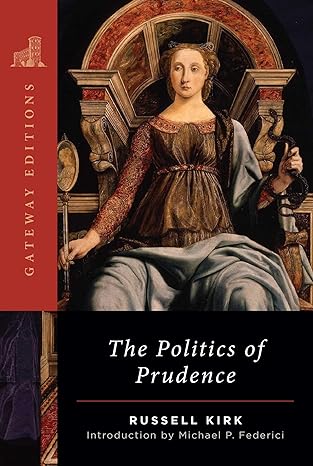
Kirk 101: The Politics of Prudence
“The vision of Politics of Prudence is as an inoculation against the ‘sham religion and sham philosophy’ of ideology. It is not a better ideology that we need, but rather none at all.”
The Prophet of Imprudence
“As the conservative mind is again on the defensive in America… The Politics of Prudence suggests that no less than the imprudence of conservatives is much to blame for the latest rout. Thirty years ago, few conservatives wanted to hear such a message. Today it calls out as a testament to what went wrong and a corrective for what’s to come.”
The Politics of Prudence: Introduction to the 2023 Edition
“The politics of prudence assumes that imperfection is a permanent part of human character and human society. We grope toward a tolerable order that accepts imperfection, the devil we know, while avoiding greater evils, the devil we do not know. Preservation of civilization, as imperfect as it is, is the conservative’s work.”

Germans at War
“…Oxford military historian Peter H. Wilson attempts to take aim at another popular narrative about World War II: that Germans are essentially militant people whose history inevitably led to World War II and National Socialism.”
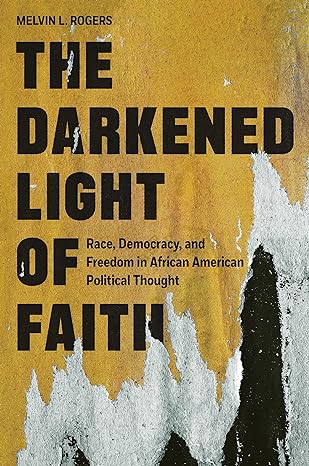
The Conscience of a Nation
“Examining the work and lives of prominent African Americans in the nation’s history, Rogers argues that these individuals sought to transform the United States into a racially just society by having Americans live up to the country’s democratic ideals.”
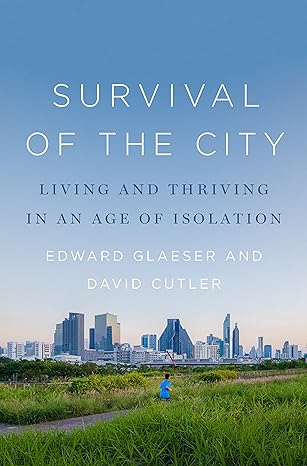
A Premature Treatment of Our Post-Covid Urban Issues
“Is [the book] about public health? Is it about urban economics? Is it about sociology? Unfortunately, by trying to cover all these topics in such an in-depth way in one book, [the authors] end up doing none of them well.”
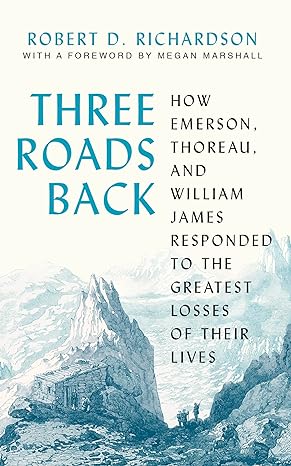
The Graces of Death and Nature
“Three of America’s most famous writers and intellectuals, Ralph Waldo Emerson, Henry David Thoreau, and William James, came to believe that death was a beginning, a moment of renewal and regeneration, not the finality of dissolution.”
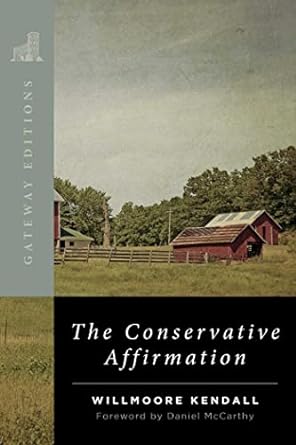
Right Populism
“[Kendall] thus seems likely to remain a challenging figure within the conservative intellectual tradition, but the challenges he offers his readers should make a study of his thought a more profitable exercise, not less.”
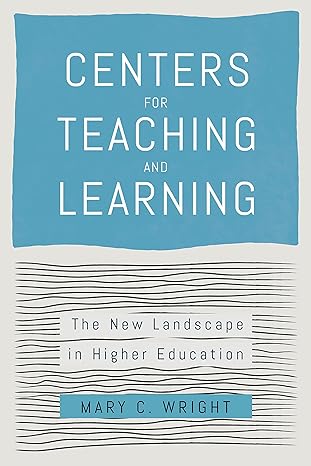
Squeezing Out Virtue and Beauty
“…the presence of CTLs raise a fundamental question about teaching and learning themselves: can teaching and learning be reduced to a single methodology or are they by nature resistant to it?”
The Book Gallery
A collection of conversations with Bookman editor Luke C. Sheahan and writers and authors of imagination and erudition. Click on the icon in the upper right corner of the video to see more episodes in this series or check out our YouTube page.


@ubookman Plus every donor will receive a new audio recording of Kirk's "Ex Tenebris," a great ghostly listen! Help @ubookman reach $20k and continue to review the books that build culture: https://buff.ly/MLnMl4e
Did you hear? This month a generous supporter has offered to MATCH every gift up to $5k for the Kirktober campaign in support of the mission of @ubookman: https://buff.ly/PECA0Az.
Shop through Creed and Culture Publishing